
carbon molecular sieve for nitrogen generator
Nitrogen plays a vital role in modern industry, from food preservation to chemical processing and advanced manufacturing. To meet the growing demand for reliable and cost-effective nitrogen supply, many companies rely on nitrogen sieves, specifically carbon molecular sieves (CMS). A carbon molecular sieve for nitrogen generator is a specialized adsorbent material that separates nitrogen from air through a process called Pressure Swing Adsorption (PSA).
At the forefront of this field is YUANHAO, a professional China carbon molecular sieve manufacturer with more than 15 years of experience. Established on a production base of 6,617 square meters and equipped with 4,500 square meters of modern construction. With an annual capacity of 1,600 tons and models ranging from CMS-220 to CMS-330, YUANHAO provides reliable solutions that support global air separation industries.
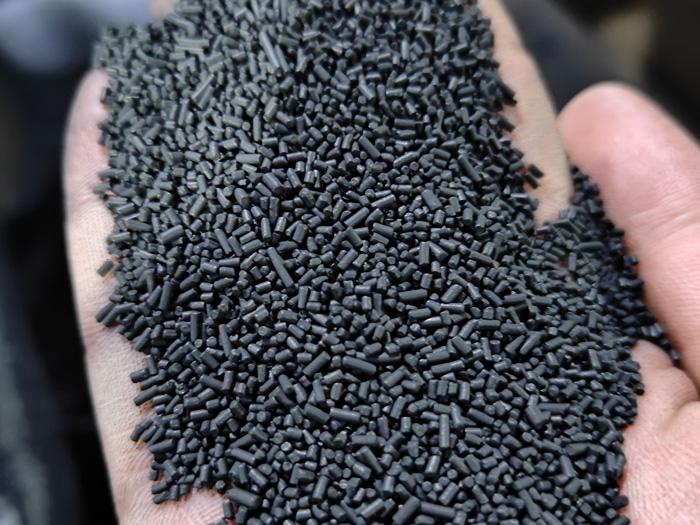
nitrogen sieve types
Nitrogen sieves come in different grades to meet varying industrial requirements. Each model of carbon molecular sieve has unique adsorption characteristics, making it suitable for specific nitrogen generation conditions. YUANHAO provides six main models—CMS-220, CMS-240, CMS-260, CMS-280, CMS-300, and CMS-330—ensuring that every industry, from general manufacturing to high-tech electronics, can select the most suitable option for its nitrogen needs.
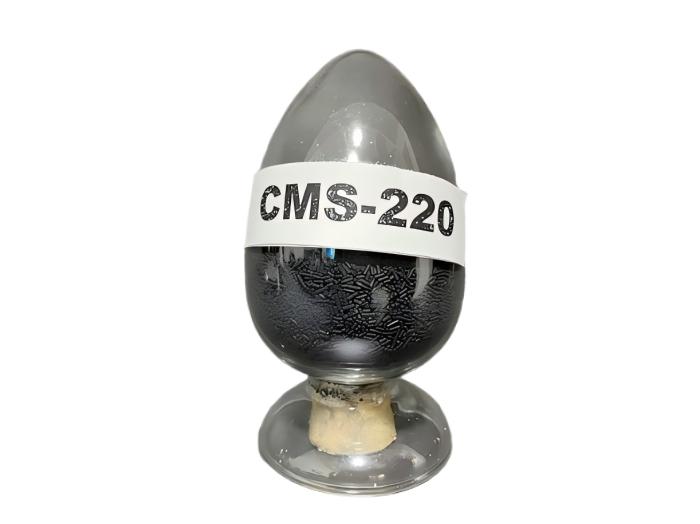
CMS 220
CMS-220 is an entry-level carbon molecular sieve designed for nitrogen generation systems where 95–97% purity is acceptable. It is widely applied in industries such as tire inflation, fire prevention systems, and basic storage applications.
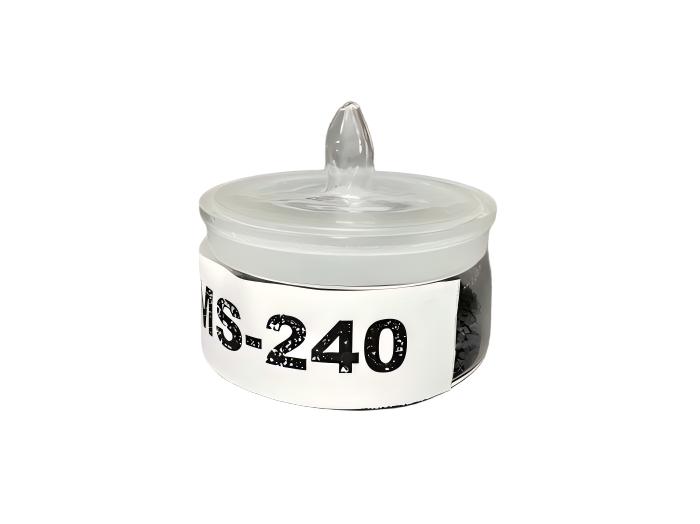
CMS 240
CMS-240 offers an improved balance between efficiency and cost. It typically produces nitrogen in the 97–98% purity range. Industries such as packaging, textiles, and light chemical processing benefit from CMS-240.
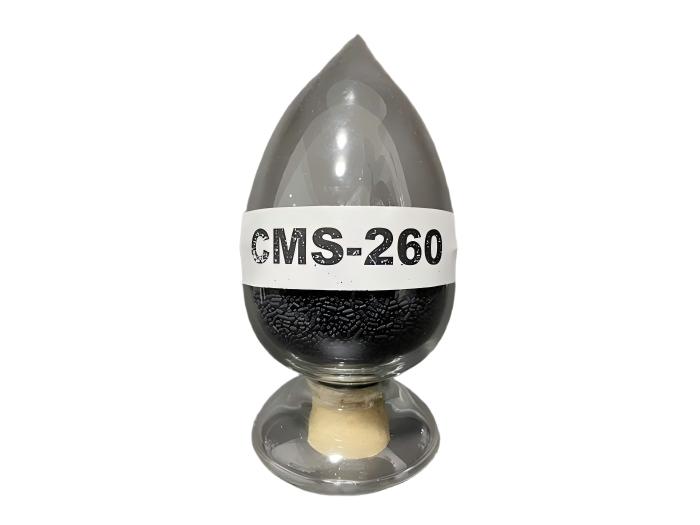
CMS 260
CMS-260 is engineered for applications that demand higher nitrogen purity, usually between 98–99%. It is commonly used in electronics assembly, chemical storage, and metallurgical processes that require stricter control over oxygen content.
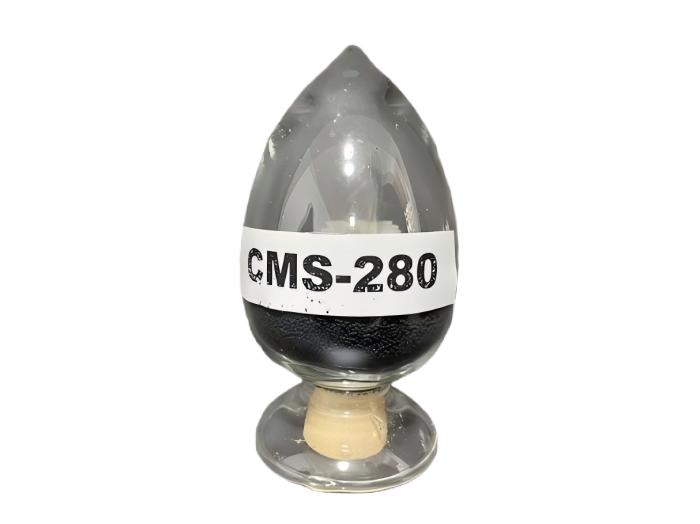
CMS 280
Carbon molecular sieve cms 280 typically produces nitrogen at 98–99% purity. It emphasizes fast adsorption performance and high nitrogen yield, making it particularly effective in food packaging, beverage production, and pharmaceuticals.
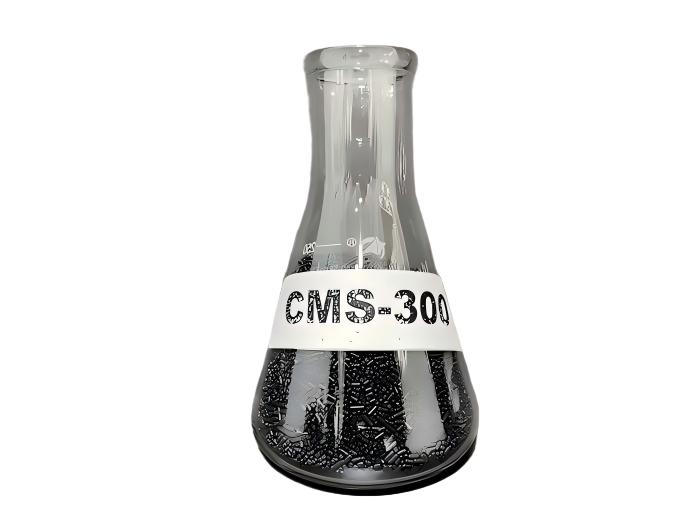
CMS 300
CMS-300 delivers 99.5% nitrogen, which makes it a preferred choice for industries that require strict oxygen control. Applications include metallurgy, pharmaceutical manufacturing, and petrochemical processing.
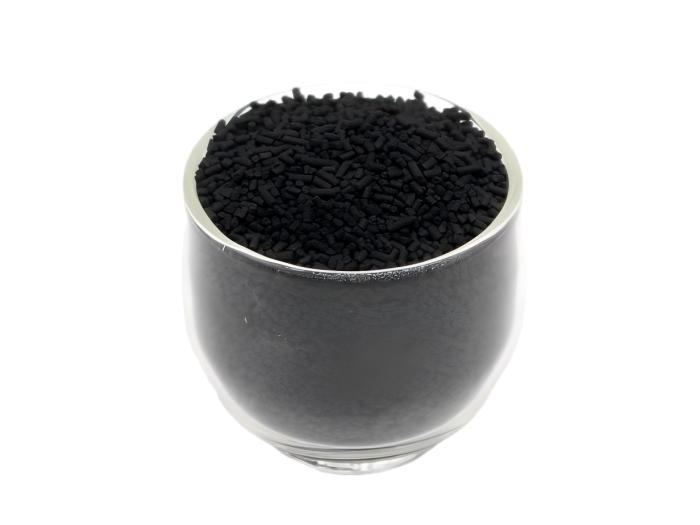
CMS 330
CMS-330 is YUANHAO’s premium grade, specifically designed for ultra-high purity nitrogen generation, often exceeding 99.9%. It is essential for advanced applications such as semiconductor manufacturing, laboratory testing, and precision chemical synthesis.
YUANHAO- Your Trusted Partner
China Carbon Molecular Sieve Manufacturer
High Production Capacity
With an annual output of 1,600 tons, YUANHAO ensures a consistent and sufficient supply of carbon molecular sieves for a wide range of industrial applications.
Commitment to Innovation
By continuously improving production processes and optimizing product performance, Yuanhao has obtained 3 invention patents and 10 utility model patents.
International Certifications
The company holds ISO 9001, ISO 14001, and ISO 45001 certifications, reflecting its commitment to quality, environmental responsibility, and occupational safety.
carbon molecular sieve for nitrogen generator properties
Carbon molecular sieve for nitrogen generator, also known as carbon molecular sieves, possess a range of unique properties that make them the preferred material for PSA nitrogen generation. Their performance depends on carefully controlled pore structures, high stability, and selective adsorption capabilities.
Long-Term Durability
carbon molecular sieve for nitrogen generator are highly durable materials that maintain their structural integrity over years of operation. Their resistance to crushing and chemical degradation allows them to perform consistently even under demanding industrial conditions. This durability reduces maintenance costs and ensures stable nitrogen output.
Stable Performance
carbon molecular sieve for nitrogen generator demonstrate excellent stability throughout their operational lifespan. They maintain consistent adsorption rates and purity levels even after numerous PSA cycles. This stability ensures that nitrogen generation remains predictable, helping industries achieve strict quality control standards.
Fast Adsorption Kinetics
Another vital property of carbon molecular sieve for nitrogen generator is their ability to adsorb gases at a rapid pace. Oxygen molecules are quickly captured within the pores, which allows PSA systems to operate in short cycles. This fast adsorption and desorption capability ensures continuous nitrogen generation with minimal downtime.
High Nitrogen Selectivity
Nitrogen sieves are designed with micropores that allow oxygen molecules to be adsorbed much faster than nitrogen molecules. This selective adsorption property is the foundation of PSA nitrogen technology, as it enables a nitrogen-rich stream that meets industry requirements.
High Bulk Density
High bulk density directly increases nitrogen production per unit volume of adsorbent. Higher density means more active adsorption sites are available, leading to better efficiency in PSA towers. This property is particularly beneficial for compact or high-capacity nitrogen plants.
what is carbon molecular sieve nitrogen generation
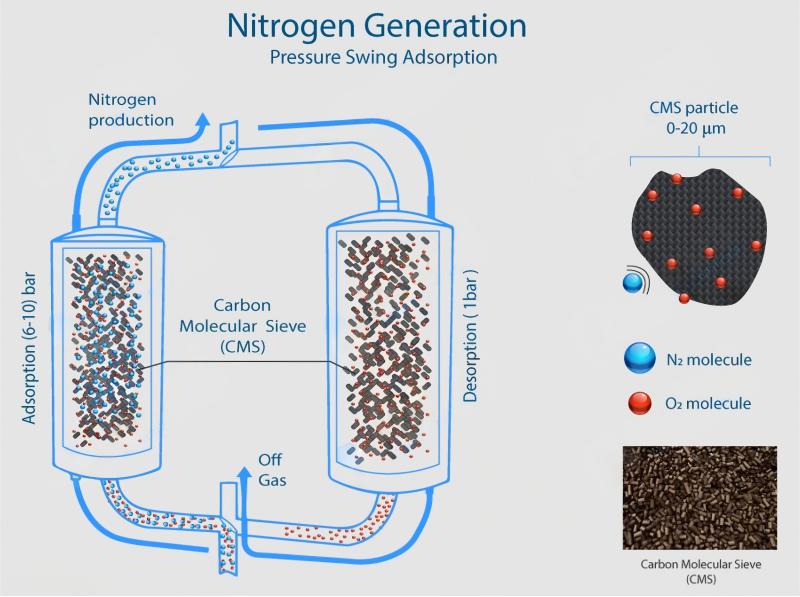
Carbon molecular sieve nitrogen generation is a process that uses pressure swing adsorption (PSA) to separate nitrogen from air. When compressed air passes through a tower filled with carbon molecular sieve, oxygen molecules are adsorbed more quickly, leaving nitrogen as the main output gas. This cycle repeats continuously, delivering a steady flow of nitrogen. The result is an efficient, on-site nitrogen supply without the need for costly liquid nitrogen delivery.
As the core adsorbent material in pressure swing adsorption (PSA) nitrogen production processes, carbon molecular sieves enable continuous nitrogen generation through alternating operation of two CMS-filled adsorption towers. Key advantages include operating at ambient temperature and low pressure, low investment costs, rapid nitrogen production, low energy consumption, and the ability to produce high-purity nitrogen (95%–99.999%). Oxygen-nitrogen separation efficiency depends not only on CMS’s pore size distribution and kinetic selectivity but also on system loading and design.
Why Carbon Molecular Sieve Is Used in PSA Nitrogen Generators
Cost-Effective Operation
Using carbon molecular sieve significantly reduces the cost of nitrogen supply. Unlike purchasing bottled or liquid nitrogen, PSA systems only require electricity for air compression and minimal maintenance. The CMS material is durable and maintains its adsorption performance over time, which lowers replacement frequency. This cost efficiency allows industries to save a large percentage of expenses while enjoying a dependable, on-site nitrogen source.
Flexible Purity Control
Carbon molecular sieve makes it possible to adjust nitrogen purity levels by simply changing system operating conditions, such as cycle time or pressure. This flexibility allows one PSA system to serve different industries, from food packaging requiring 95–99% nitrogen to electronics production needing ultra-high purity levels. By relying on CMS, plants can easily meet changing customer or production requirements without investing in entirely new equipment.
Energy Efficiency
PSA nitrogen systems with CMS operate efficiently because oxygen is adsorbed quickly and desorbed easily during pressure changes. This minimizes energy waste and maximizes nitrogen yield per cycle. The ability to regenerate the sieve repeatedly without losing performance ensures that plants consume less electricity compared to alternative methods. As a result, CMS not only lowers operational costs but also supports more sustainable nitrogen production practices.
How cms in nitrogen plant works
In a nitrogen plant, carbon molecular sieve (CMS) is packed inside adsorption towers to separate nitrogen from air. When compressed air enters the tower, oxygen molecules are adsorbed more quickly by the CMS, while nitrogen molecules pass through and are collected as product gas.
The process runs in cycles with two towers operating alternately: one tower produces nitrogen, while the other regenerates by releasing the trapped oxygen. This continuous switching ensures a steady nitrogen supply with consistent purity.
Air Compression
Ambient air is compressed and purified to remove dust, oil, and moisture.
Adsorption
Compressed air flows through the CMS bed, where oxygen and other impurities are adsorbed.
Nitrogen Collection
Nitrogen molecules pass through the CMS and are collected as product gas.
Regeneration
Pressure in the other tower is released, allowing oxygen to desorb, and the CMS is ready for the next cycle.
nitrogen sieve used in industrial gas separation
Nitrogen sieves, called as Carbon molecular sieves, are central to industrial gas separation, as they selectively adsorb oxygen and other trace gases from compressed air, enabling the efficient production of nitrogen. Their role goes beyond nitrogen supply, directly supporting key gas separation processes across industries.
Hydrogen Purification Support
Syngas and Ammonia Production
Inert Gas Generation
carbon molecular sieve for nitrogen generator faq
YUANHAO experts provide professional guidance for common problems
Why is Carbon Molecular Sieve used for nitrogen generators?
Carbon Molecular Sieve is the key adsorption material used in PSA nitrogen generators because it can efficiently separate oxygen and nitrogen from compressed air. Through selective adsorption, CMS removes oxygen molecules while allowing nitrogen molecules to pass through. The quality of Carbon Molecular Sieve directly affects nitrogen purity, production capacity, energy efficiency, and the overall performance of the nitrogen generator.
How does Carbon Molecular Sieve improve nitrogen generator performance?
Carbon Molecular Sieve improves nitrogen generator performance by providing high oxygen adsorption selectivity and stable adsorption-desorption cycles. A suitable CMS grade helps the PSA system achieve faster separation, lower air consumption, and more stable nitrogen output. High-performance CMS materials can also improve the operating efficiency and reliability of nitrogen generation equipment.
How does a PSA nitrogen generator work with Carbon Molecular Sieve?
In a PSA nitrogen generator, Carbon Molecular Sieve is filled into adsorption towers where compressed air is introduced under pressure. CMS selectively adsorbs oxygen and other impurities, while nitrogen remains as the product gas. When the pressure is reduced, the adsorbed oxygen is released, allowing CMS to regenerate and continue the next adsorption cycle.
What nitrogen purity can Carbon Molecular Sieve achieve in nitrogen generators?
The nitrogen purity achieved by Carbon Molecular Sieve in nitrogen generators depends on the CMS grade, PSA process parameters, adsorption pressure, and system design. Different CMS products are designed for different purity requirements, from standard industrial nitrogen production to high-purity nitrogen applications requiring very low oxygen content.