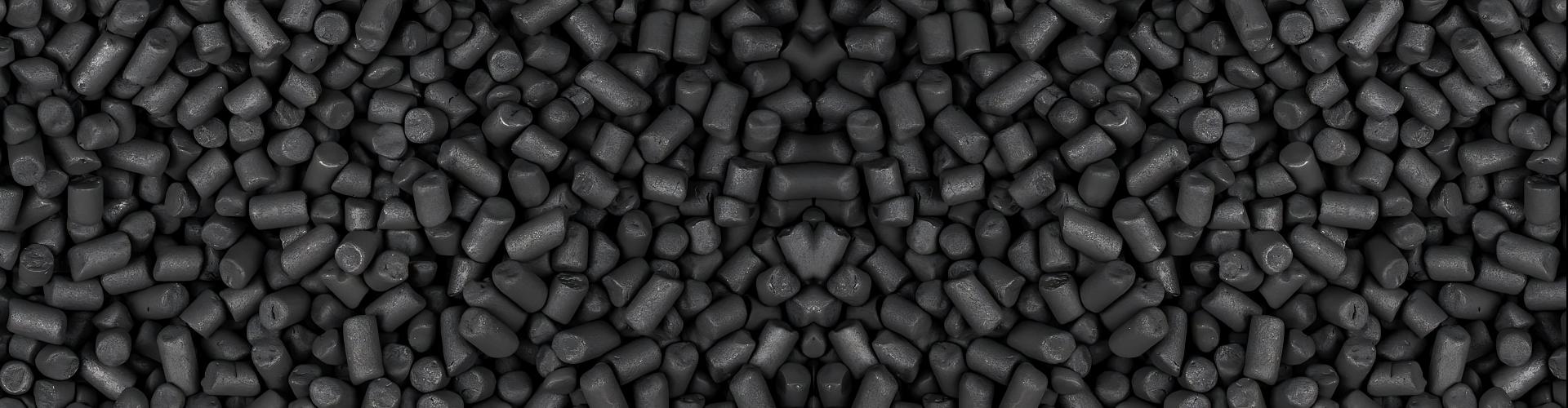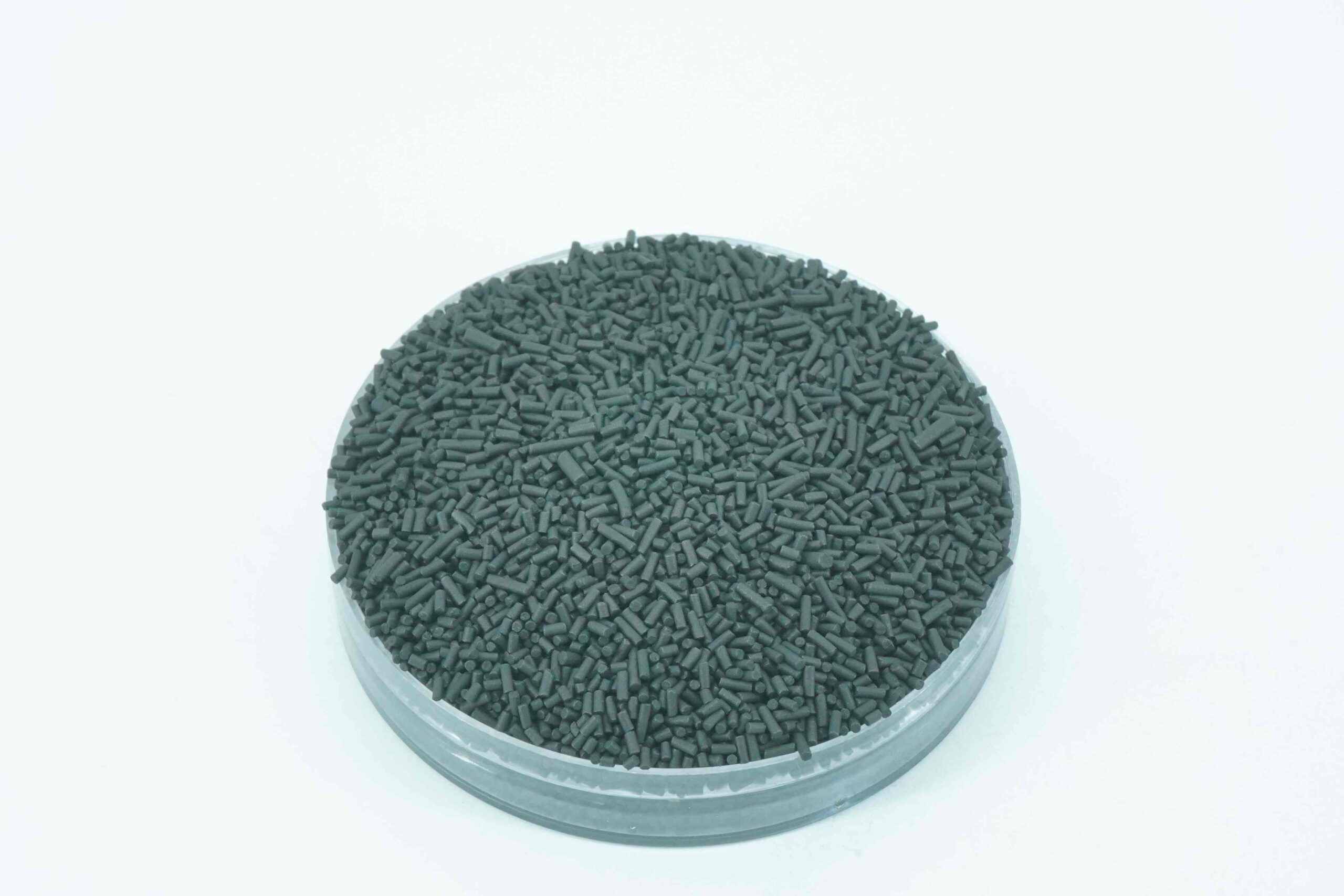
Carbon molecular sieve adsorbents drive pressure swing adsorption systems for industrial gas separation. These microporous carbonaceous materials separate gas mixtures through precise kinetic selectivity mechanisms. Oxygen molecules with a 3.46 Å kinetic diameter enter narrow carbon micropores rapidly. Nitrogen molecules measuring 3.64 Å enter much slower into the structure. This kinetic rate difference determines total separation performance and final gas purity levels. Commercial manufacturers like YUANHAO enforce strict quality control during the production of YH series materials. Gas plant engineers evaluate key physical, chemical, and operational properties to maximize kinetic adsorption efficiency. High performance adsorbents deliver reliable, continuous nitrogen generation across demanding industrial plant operations.
Key Takeaways
- Carbon molecular sieves quickly catch small oxygen molecules inside tiny holes to make clean nitrogen gas.
- Solid carbon pellets withstand high pressure and stop dust from building up inside working gas tanks.
- Non-polar carbon surfaces naturally push away water to keep gas separation fast inside humid factories.
- Adjusting the pressure settings allows workers to reach high nitrogen purity levels of up to 99.999 percent.
Physical Properties of Carbon Molecular Sieve

Micropore Structure and Selectivity
Carbon molecular sieve adsorbents separate air gases using specially designed internal pore networks. Advanced chemical processing builds precise carbon channels inside every individual granule. Factory teams enforce careful quality rules during heat treatments to form uniform micropores. Operators pick target adsorbents to meet specific factory production goals. Selecting the right material guarantees a long service life. These custom micropores control total separation success inside commercial pressure swing adsorption plants.
This exact internal pore layout dictates how fast different gas molecules move into the material. The table below lists the main physical metrics that define these modern carbon adsorbents:
| Physical Metric | Recorded Specification | Role in Gas Separation |
|---|---|---|
| Micropore volume | 0.15–0.25 cm³/g | Offers micropore space for fast oxygen intake |
| Specific surface area | 250–400 m²/g | Drives rapid rates for kinetic oxygen adsorption |
| Pore-size distribution | 3–5 Å | Allows precise kinetic selectivity for gas separation |
Plant engineers study internal surface data to predict real working performance under actual plant conditions. Standard technical guides highlight this main structural link:
CMS‘s microporous structure—combining high internal surface area with controlled, uniform micropores—favors O2 adsorption while limiting N2 adsorption. As the core functional material in a PSA nitrogen generator, CMS governs product nitrogen purity, recovery percentage, cycle efficiency, and long-term stability.
Strict factory quality testing ensures matching pore sizes across every single production run. Tiny oxygen molecules slip into narrow 3–5 Å micropores very fast. Larger nitrogen molecules move much slower through the carbon pore openings. As a result, the carbon material traps oxygen molecules quickly while leaving clean nitrogen gas behind. Bigger micropore spaces allow more oxygen intake during fast pressure cycles. This quick kinetic action helps systems produce target nitrogen purity levels from 97% to 99.995%. Operators track gas recovery rates to watch overall bed performance. Good air flow distribution helps improve final product yields. Strong kinetic separation success depends directly on these special physical structure traits.
Mechanical Strength and Crushing Resistance
Industrial gas equipment builders need tough carbon molecular sieve blends to keep operations running long term. Gas plant developers buy bulk adsorbents that stay strong under harsh repeating pressure forces. Top maker YUANHAO uses strict quality testing to make durable YH series carbon adsorbents. YUANHAO molds these premium materials into 1.2–1.5 mm coarse particles to boost internal gas movement and bed stability. Larger particles lower the total pressure drop across the whole column. Better particle sizing improves air flow spread inside the bed.
Fast pressure changes cause heavy physical stress inside industrial adsorption towers. Weak adsorbent pellets break down into fine dust under constant pressure shifts. Fine dust blocks downstream control valves, cuts main gas flow, and lowers system output over time. Regular quality control stops early particle damage inside the vessel.
YUANHAO YH carbon molecular sieve pellets reach a high crushing strength of at least 100 N/piece. This impressive hardness stops bed packing and removes dust during fast pressure cycles. Strong mechanical power lengthens overall adsorbent useful life while guarding sensitive downstream gas tools. Strict quality control ensures reliable pellet strength throughout large wholesale shipments. Thorough quality testing steps expand total product life. Superior physical features keep systems running smoothly while lowering daily operating costs for factory owners.
Chemical and Thermal Stability of Carbon Molecular Sieves
Surface Hydrophobicity and Moisture Control
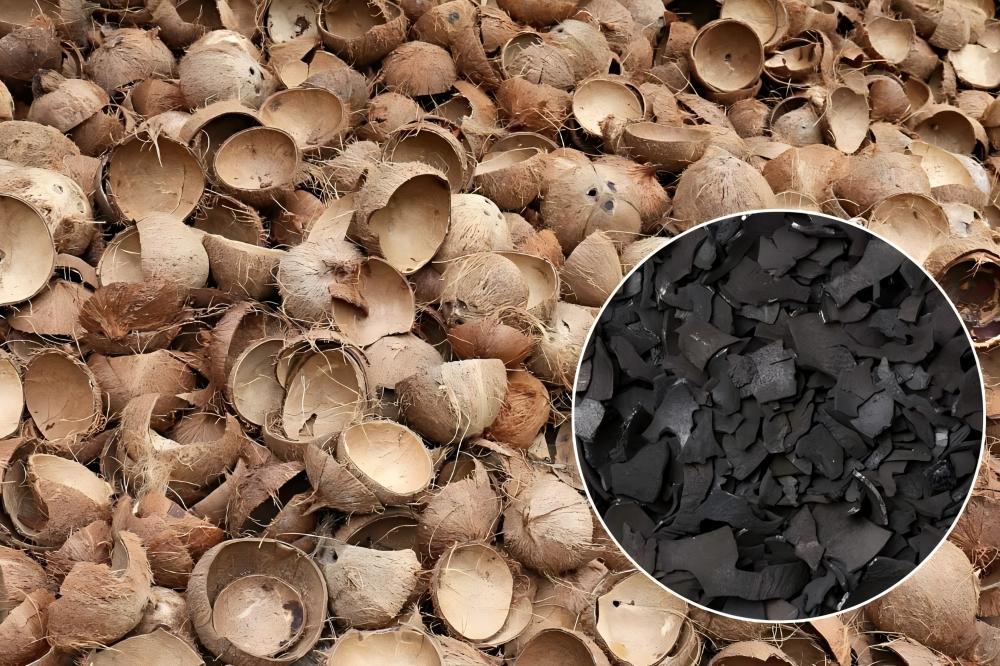
Carbon molecular sieve materials have a non-polar carbon surface structure. This special surface naturally repels water droplets during regular air processing. On the other hand, common zeolite minerals have polar surfaces that quickly pull in moisture. The comparison table below displays these main surface traits across typical factory adsorbents:
| Material | Surface chemistry | Water affinity | Relevance to query |
|---|---|---|---|
| Carbon molecular sieve | Carbonaceous (coal, coconut shell, polymers), non-polar | Hydrophobic | Non-polar surface explains preferential adsorption of non-polar hydrocarbons and weak affinity for polar water |
| A-type zeolite | Aluminosilicate, polar | Hydrophilic | Polar surface preferentially adsorbs polar water and alcohols, contrasting with CMS hydrophobicity |
Moisture often damages sensitive filtering materials inside large gas units. Water-loving zeolites soak up surrounding moisture fast, which lowers their total working capacity. In contrast, carbon molecular sieves block water intake because of their non-polar layout. Water molecules cannot block tiny inner pore channels easily. Because of this, the material keeps its normal speed for catching oxygen. High surface stability lets plants make pure nitrogen gas even in humid environments.
This strong chemical setup protects working output inside busy commercial plants. Factory teams use these adsorbents in oil refining, metal recycling, fuel storage, and wastewater facilities. Dependable chemical strength stops rapid material breakdown over time. Plants enforce tight quality checks during production to build matching water-repelling traits. These careful quality checks protect reliable air separation over thousands of repeating pressure cycles. Weak water attraction prevents messy filter clogging inside active gas tanks. Plant managers pick the best carbon sieve grade to extend total filter life. Steady moisture control promises steady nitrogen flow through standard pressure cycles. Strong material strength cuts repair downtime inside busy industrial buildings.
Thermal Resilience in Industrial Systems
Heat levels and active chemicals heavily impact how long adsorbents last. Extreme heat or strong oxygen contact can ruin delicate inner pore layouts. The summary table below shows key temperature limits and structural impacts for these carbon materials:
| Exposure condition | Surface/pore effect | Consequence for CMS separations |
|---|---|---|
| Above 400 °C | The carbon framework breaks down, pores collapse, and selective permeability is lost. | Separation efficiency decreases, so high-temperature industrial use is limited. |
| Oxidative conditions | Active carbon sites are oxidized and gasified, causing atomic rearrangement and pore-size changes. | The molecular-sieving function is weakened, reducing overall separation efficiency. |
| Above 500 °C | Micropores are rearranged: narrow pores widen and wider pores narrow, destroying size-exclusion behavior. | Precise molecular sieving is lost, which is critical for syngas hydrogen purification and petrochemical gas separation. |
Factory operators watch working heat levels carefully to prevent deep structural harm. Temperatures over 400 °C crush the primary carbon skeleton. This total breakdown forces tiny pores to close up, which ruins overall air filtering power. Heat over 500 °C changes thin carbon pathways completely. Tight pores stretch wider while open pores shrink down. This shift destroys crucial size-sorting rules and drops main system output. Excessive heat permanently shifts pore sizes, which harms long-term work stability.
Air containing oxygen can also destroy active carbon surface locations. Oxygen burns away these carbon spots during sudden heat surges. This tiny atomic movement alters pore spaces and lowers total system output. Strict factory quality checks remove structural defects before setup. Dependable quality checks ensure steady gas movement inside working pressure tanks. Technicians test material features before starting up new machinery setups. Dependable physical traits maintain top output under changing daily work loads. Careful heat control protects overall sieve power and stretches machine lifespans in gas separation plants.
Key Carbon Molecular Sieve Performance Metrics
Adsorption Rates and N2 Purity
Tiny inner channels control how well gas separates. Tiny carbon molecular sieve pores let gas move inside very quickly. This fast action helps trap more gas and cleans better. Workers test this gas capacity during routine checks. Factory teams use strong quality controls when making the material. Fast releasing action cleans out internal spaces quickly.
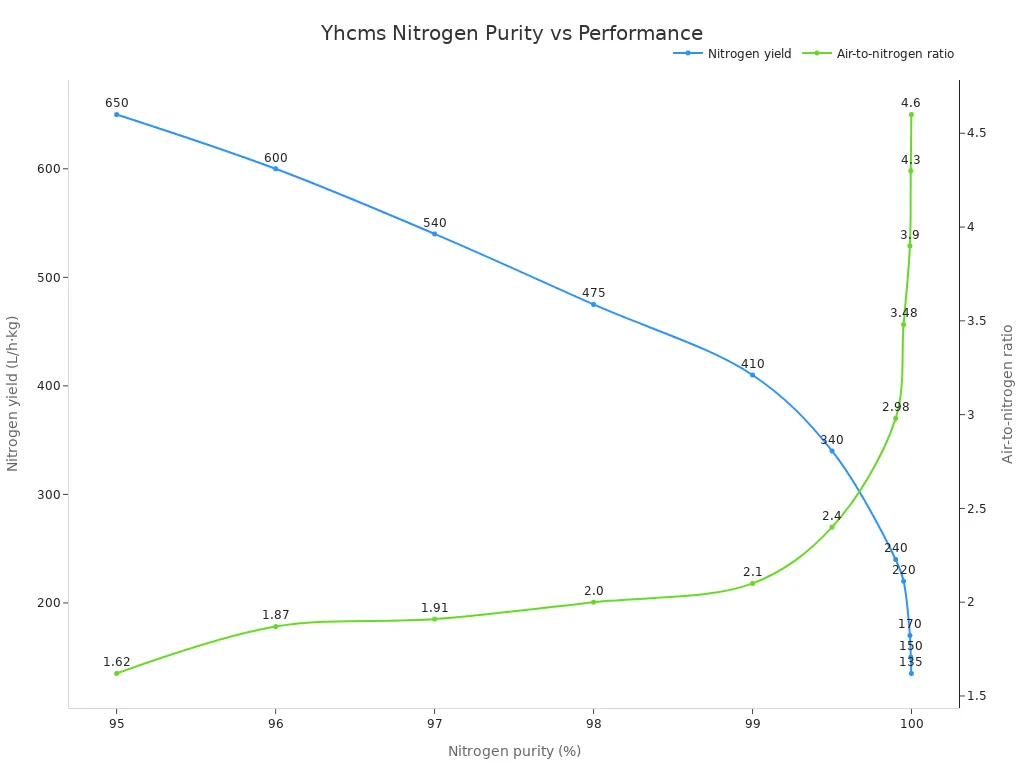
Industrial gas systems can make flexible purity levels from 95% to 99.999%. The YUANHAO YH series matches different plant needs. The table below lists product output numbers at 0.7–0.8 MPa working pressure:
| Nitrogen purity (%) | Nitrogen yield (L/h·kg) | Air-to-nitrogen ratio |
|---|---|---|
| 99.999 | 135 | 4.6 |
| 99.9 | 240 | 2.98 |
| 95 | 650 | 1.62 |
Engineers pick exact gas purity targets for their special job needs. Product spec sheets show these performance abilities clearly:
YUANHAO Carbon Molecular Sieve is described as providing excellent nitrogen purity, reaching up to 99.999% depending on PSA system design.
Cycle Timing and Pressure Adaptability
The chart illustrates output curves clearly across purity ranges:
Special material recipes help separate gas across different pressure settings. Gas systems run smoothly under low pressures like 0.5–0.6 MPa. Machines also handle high pressures like 1.0–1.6 MPa easily. Other setups use longer working cycles of 80–120s*2. Regular quality checks promise steady pressure reactions. Factory engineers test these check numbers during assembly. Careful quality checks keep system work steady. Proper quality checks prevent sudden output drops. Good quality checks ensure steady gas sorting. Top material mixes give great results in hard factory conditions. Plant leaders keep machinery working well without extra trouble. Approved factory methods reach trustworthy output every day. Also, plant teams follow standard quality checks under ISO 9001, ISO 14001, and ISO 45001 rules. These traits ensure long system work over time. High testing rules keep long value in products.
Combining the right internal pore setup, water-repelling traits, and tough strength boosts complete system success. Strong carbon pellets that resist breaking and exact pore sizes lower overall factory expenses. These physical features reduce the need for compressed air while keeping nitrogen purity levels high. Careful quality checks at the factory protect gas separation power while plants run non-stop.
Engineers speed up gas trapping rates by making special carbon sieve recipes. Strict factory quality checks ensure the equipment works well under changing tank pressures. Matching key material details to actual job needs boosts overall factory success over time. System operators pick the right material grade to hit target gas purity levels and get the best separation results.
FAQ
How does a carbon molecular sieve separate oxygen from nitrogen?
Small oxygen bits rush into tiny pore spaces very quickly. Bigger nitrogen bits travel through the material much more slowly. This difference in movement speed lets the sieve trap oxygen during processing. The smart pore design improves separation work while gathering clean nitrogen gas.
How does mechanical strength protect system performance?
Engineers select sturdy pellets that resist crushing up to 100N per piece. These strong carbon pieces handle repeated pressure changes without crumbling into pieces. Careful factory testing stops particle damage inside the tank. Durable pellets protect overall machine work and help the material last longer.
What nitrogen purity levels can industrial systems achieve?
Special gas machines create custom purity levels from 95% all the way to 99.999%. System workers change the pressure and timing to meet daily plant needs. Factory quality checks keep gas output steady under different working conditions. The system offers steady performance during long daily runs.
Why does micropore structure affect total gas capacity?
The empty space inside tiny pores provides crucial room to hold target gas bits. Fast action traps oxygen inside matching channels during high pressure steps. Continuous quality checks ensure the same pore shapes across all factory batches. Correct pellet sizing maintains strong plant output over many years.
How do adsorbents perform under varying operating pressures?
New material mixes work easily under low pressures like 0.5–0.6 MPa and higher pressures like 1.0–1.6 MPa. Strict quality tests guarantee steady material reactions during quick pressure shifts. System changes allow longer cycle times up to 80–120s*2 while keeping system work high.