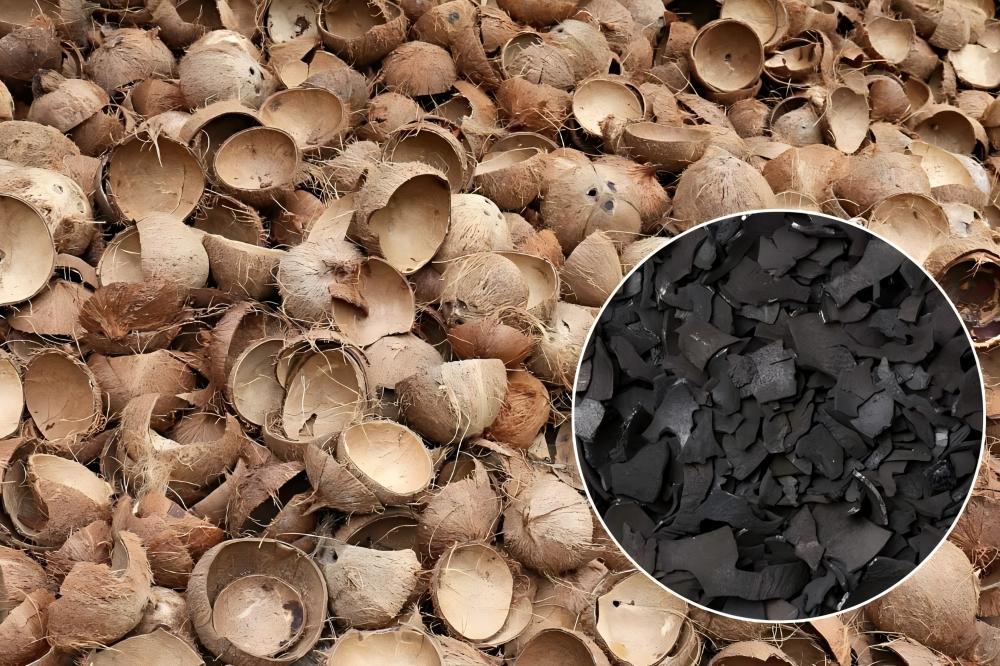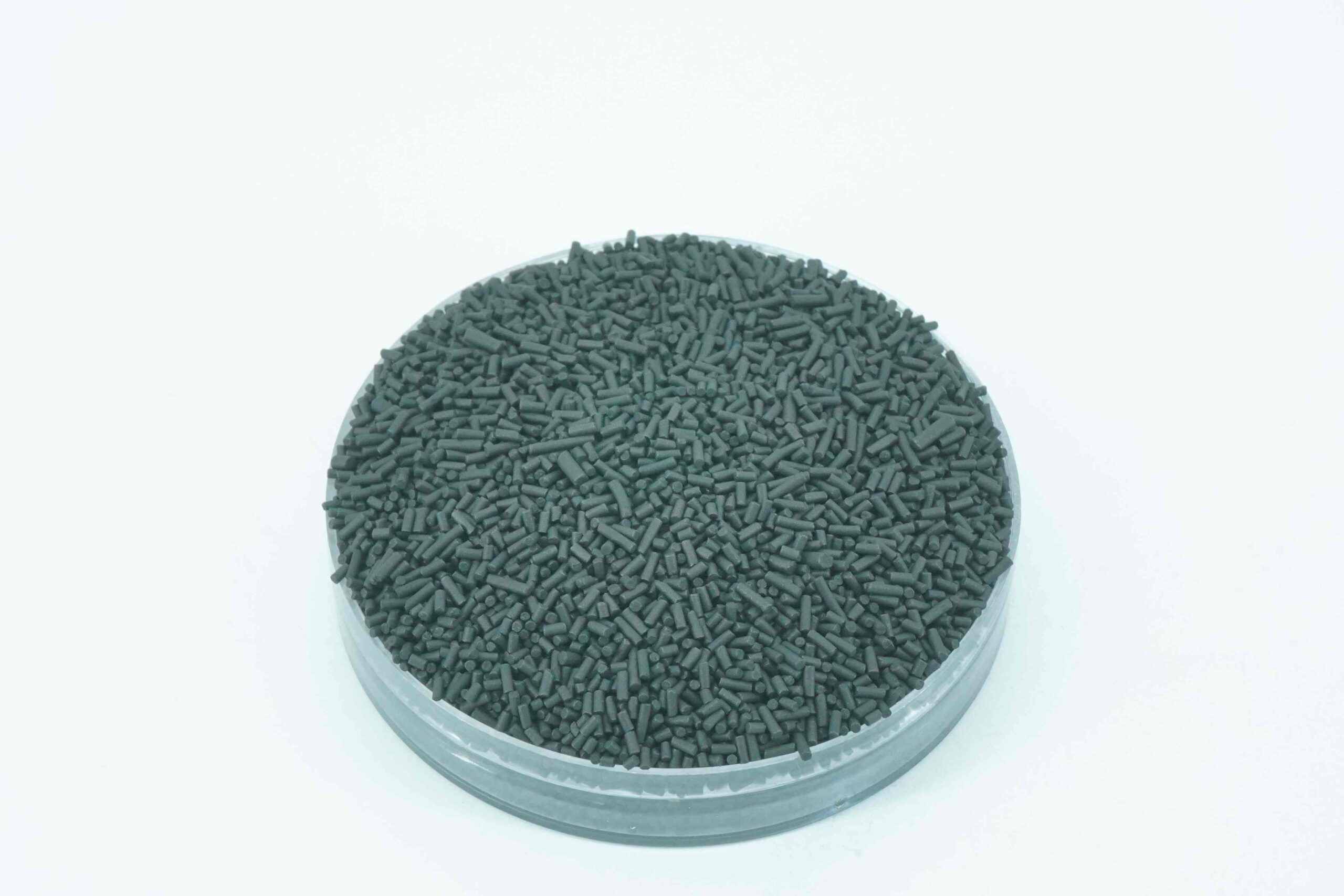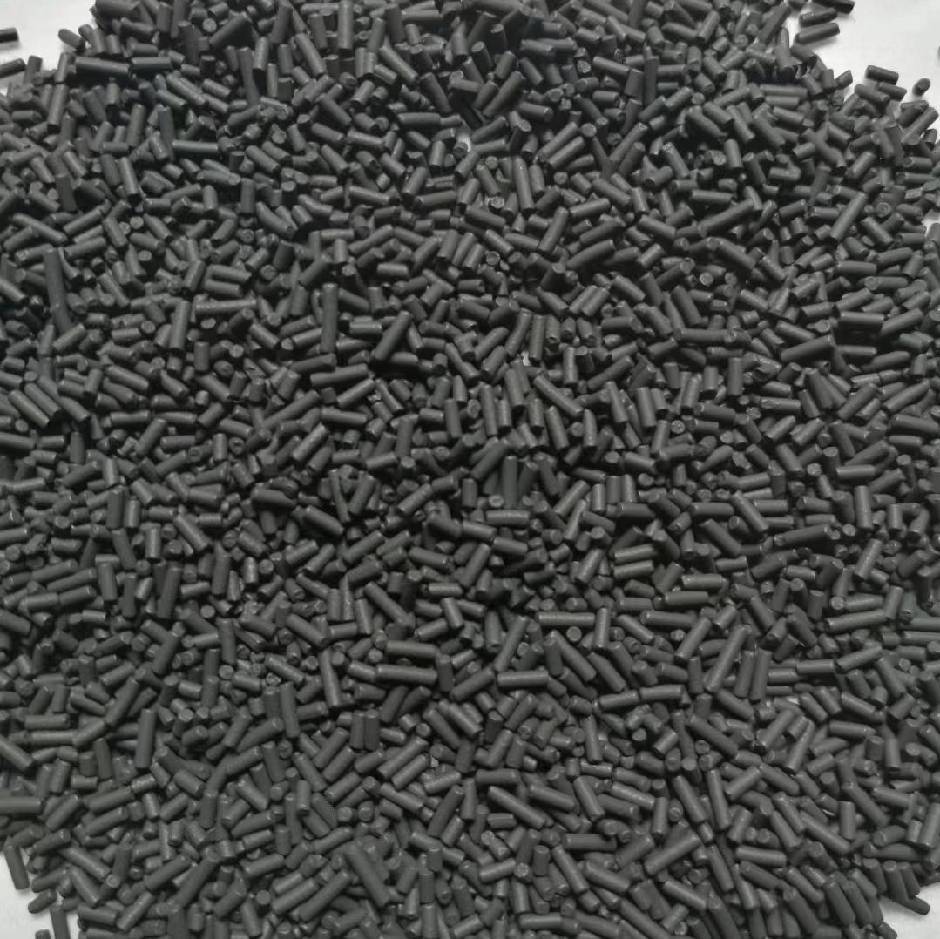
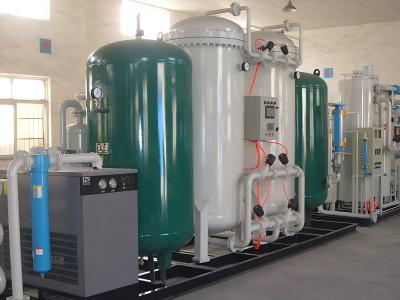
The Pressure Swing Adsorption (PSA) process works by using pressure swing adsorption technology to effectively separate nitrogen from air. Many industries require pure nitrogen for various applications, and they rely on a specialized adsorbent called a carbon molecular sieve. The PSA process operates as follows:
- Air is compressed and purified.
- The purified air is fed into a column containing a carbon molecular sieve.
- Oxygen is adsorbed onto the carbon molecular sieve, while nitrogen continues to escape as a product gas.
- The pressure is reduced to release the adsorbed gas, preparing for the next cycle.
Key Takeaways
- PSA works by changing pressure to split nitrogen from air. This is very important for factories that need pure nitrogen.
- Carbon molecular sieves play a big role in PSA. They catch oxygen and let nitrogen go through.
- The PSA process has four main steps: adsorption, depressurization, regeneration, and repressurization. These steps help make nitrogen all the time.
PSA Working Principle Explained
Adsorption Phase
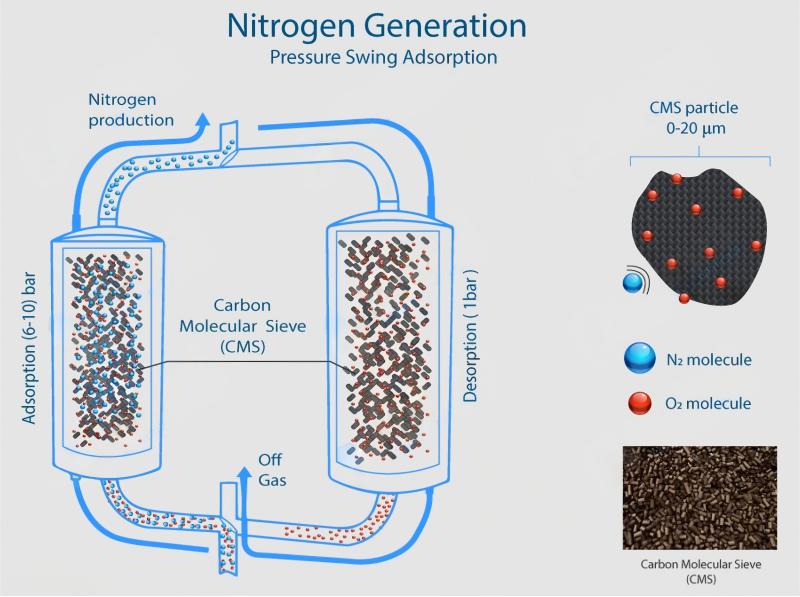
The working principle of pressure swing adsorption (PSA) begins with the adsorption stage. Clean, dry compressed air enters the adsorption container. Inside the container, carbon molecular sieves act as the adsorbent. These molecular sieves adsorb oxygen, moisture, and carbon dioxide from the air. Nitrogen gas passes through the molecular sieves and is discharged as a product gas.
| Gas Type | Molecular Size (Angstroms) | Adsorption Capability |
|---|---|---|
| Carbon Dioxide (CO2) | < 3.7 | High |
| Nitrogen (N2) | < 3.7 | High |
| Methane (CH4) | > 3.7 | Low |
YUANHAO is a top maker and seller of carbon molecular sieves. They make high-quality adsorbents for good nitrogen separation. Their factory covers 6,617 square meters and can make 1,600 tons each year. This helps meet big industrial needs.
Depressurization Phase
The next step in the working principle is depressurization. The adsorption container stops operating, and the pressure drops rapidly. This causes the gases adsorbed by the adsorbent (mainly oxygen and moisture) to be released from the carbon molecular sieve. Nitrogen from another container carries these gases away. Reducing the pressure is crucial because it allows the adsorbent to fully expel the adsorbed gases.
Tip: The pressure swing adsorption process uses quick pressure changes. This helps both adsorption and desorption. It makes the system work well for making nitrogen all the time.
Regeneration Phase
During the regeneration phase, the PSA (Pressure Swing Adsorption) principle helps the adsorbent return to its normal state. The system uses rapid depressurization (called depressurization) to release the adsorbed molecules. Sometimes, high-purity nitrogen is flowed through the container to remove residual contaminants from the micropores. This step allows the carbon molecular sieve to be reused. YUANHAO’s carbon molecular sieves operate quickly, allowing for rapid cleaning without prolonged downtime.
- The depressurization process removes the adsorbed gas.
- The purging process cleans the adsorbent.
- The repressurization process prepares the container for the next cycle.
Repressurization Phase
The final step in the working principle is repressurization. The container is slowly restored to the operating pressure, preparing the carbon molecular sieve for the next stage of adsorption. The PSA system switches between the two containers, ensuring continuous nitrogen production. YUANHAO’s advanced carbon molecular sieves, such as CMS-220 and CMS-330, can be customized to meet the specific needs of industries requiring high-purity nitrogen.
Ordered List: Main Steps in PSA Nitrogen Generation
- Adsorption Phase: Compressed air goes into tower A. Carbon molecular sieves catch oxygen, moisture, and carbon dioxide.
- Nitrogen Collection: Clean nitrogen leaves tower A for use or storage.
- Regeneration Phase: Pressure drops in tower B. The sieve lets go of the trapped gases.
- Cycle Continuation: Towers switch between adsorption and regeneration. This keeps nitrogen supply steady.
The working principle of pressure swing adsorption helps separate gases well. It uses the special features of adsorbents and fast pressure changes. YUANHAO is a wholesale supplier and custom maker. They provide certified carbon molecular sieves that meet ISO 9001, ISO 14001, and ISO 45001 standards. Their skill makes sure PSA nitrogen generators work their best in many industries.
Key Components of a Nitrogen Generator
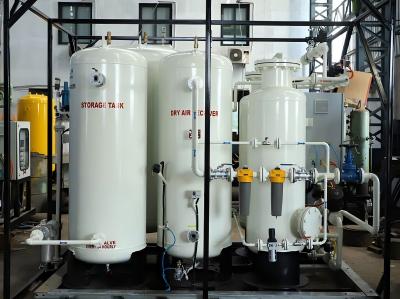
A nitrogen generator has several main parts. These parts help make pure nitrogen gas. Each part has its own job in the system. The main parts are carbon molecular sieve, adsorption columns, and special valves and controls.
Carbon Molecular Sieve
Carbon molecular sieves are the most important component of PSA nitrogen generators. This material can capture oxygen while allowing nitrogen to pass through. Its special shape allows it to selectively adsorb nitrogen rather than oxygen. YUANHAO’s carbon molecular sieves are high-strength, have a fast reaction speed, and can last three to five years if used properly. The company has an annual production capacity of up to 1,600 tons.
| Property | Carbon Molecular Sieves | Other Adsorbent Materials |
|---|---|---|
| Selectivity | High for nitrogen over oxygen | Changes with material |
| Lifespan | 3 to 5 years (best) | Shorter or changes |
Adsorption Vessels
The adsorption columns (also called adsorption tanks) are filled with carbon molecular sieves. These columns are made of high-strength carbon steel and can withstand large pressure changes. The adsorption columns are designed to ensure the stable operation of the PSA nitrogen generator. Two adsorption columns work together, alternating between adsorption and regeneration. One column is responsible for adsorption, while the other is responsible for regeneration. In this way, the nitrogen generator can continuously produce nitrogen.
Valves and Controls
Valves and controls move air and nitrogen gas in the system. Smart controls watch purity and change steps for best results. Sensors check the nitrogen gas quality at each step. The system uses these controls to switch columns and keep the nitrogen generator safe and working well. YUANHAO’s nitrogen generator systems have easy controls. They meet ISO 9001, ISO 14001, and ISO 45001 standards.
Note: All parts of the nitrogen generator work together. This makes sure the system gives reliable and high-quality nitrogen gas.
Pressure Swing Adsorption for Gas Separation
Selectivity of Adsorbents
Pressure swing adsorption (PSA) systems use adsorbents to separate gases. Carbon molecular sieves are crucial in this process. These sieves have a higher adsorption capacity for certain gases than others. When the pressure is high, the molecular sieve adsorbs oxygen, while nitrogen passes through smoothly and remains pure. When the pressure decreases, the molecular sieve releases the adsorbed gas. This cycle repeats continuously to ensure the continuous generation of nitrogen.
| Factor | Description |
|---|---|
| Adsorption rate | Decides how fast the system works and how often cycles happen. |
| Regeneration capacity | Changes how long the adsorbent lasts and how much it costs to run. |
| Anti-pollution capacity | Helps the system fight dust, water, and oil, so there is less cleaning. |
| Thermal stability | Lets the adsorbent keep working even if the temperature changes. |
| Pressure levels | Affects how well the gases are separated. |
| Adsorption time | Changes how well the system can split up gases. |
| Temperature | High heat makes selectivity worse, but cold can also cause trouble. |
| Raw gas composition | Decides how well the adsorbent can separate the gases. |
| Structure of adsorption bed | If the bed is not even, gas can slip through and lower how well it works. |
Efficiency and Purity
The PSA system can adjust the purity of nitrogen gas from 95% to 99.999%. This helps different plants obtain the nitrogen they need. The electronics, food, and chemical industries all require high-purity nitrogen.
| Purity Level | Application Area |
|---|---|
| 95% | Used for simple inerting jobs |
| 99.999% | Needed for electronics and medicine |
| Technology Type | Energy Consumption (kWh/Nm³) | Output Purity Range (%) |
|---|---|---|
| PSA | 0.3 – 0.5 | 95 – 99.999 |
Advantages and Limitations
PSA technology offers several advantages in nitrogen production:
- It saves costs because producing nitrogen is cheaper than purchasing storage tanks.
- It provides a stable, continuous supply of pure nitrogen.
- It’s more environmentally friendly because there’s no need to move heavy storage tanks.
- It separates gases effectively and consistently yields the same results.
However, PSA systems require clean air to function optimally. Dust, water, and oil can clog the screens, reducing their efficiency. Furthermore, the machines can be quite large, making them unsuitable for confined spaces.
Note: Good carbon molecular sieves from trusted companies help keep nitrogen pure and production steady during gas separation.
Pressure swing adsorption works in steps to make nitrogen gas. Carbon molecular sieves help separate oxygen from nitrogen. Good sieves make sure the system works well and gives pure nitrogen. YUANHAO gives trusted products to industries that need steady nitrogen. Their solutions help factories get nitrogen easily and quickly.
FAQ
What is the main difference between PSA and membrane separation?
PSA separates gases by changing pressure. Membrane separation uses a thin layer as a barrier. Both methods help make nitrogen for different jobs. Each one has its own good points.
Can membrane separation achieve the same nitrogen purity as PSA?
Membrane separation usually gives lower purity than PSA. PSA can make nitrogen that is more pure. Some companies pick membrane separation because it is simple and costs less.
Why do industries use both PSA and membrane separation for gas separation?
Industries use both PSA and membrane separation for different reasons. PSA is good for making very pure nitrogen. Membrane separation is better for quick and steady gas separation.