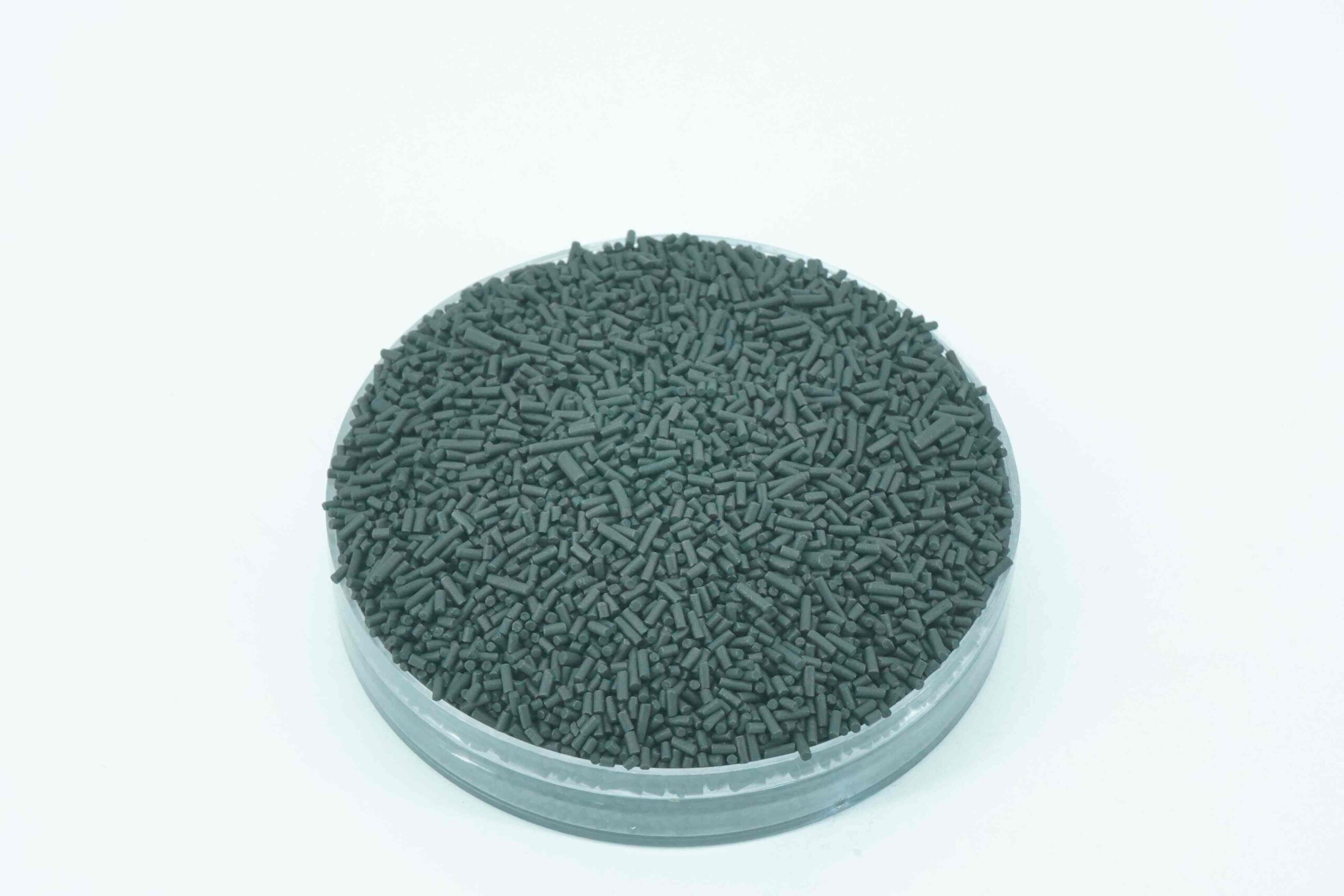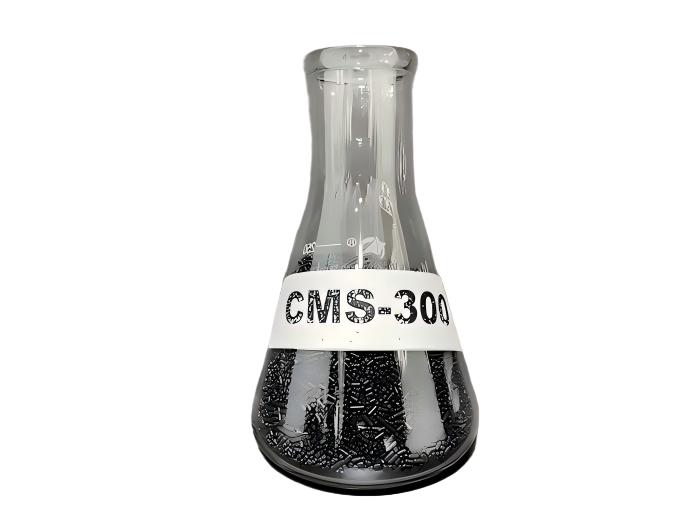
Molecular sieves are porous adsorbent materials that act like a kitchen sieve at the molecular scale: they trap molecules via physisorption (weak van der Waals forces, no chemical bonds) and separate gas/liquid mixtures by size, pressure, or temperature. The two most widely used industrial types are carbon molecular sieves (CMS) and zeolite molecular sieves (ZMS), each operating via a distinct separation mechanism. The global zeolite molecular sieve market alone reached USD 4.8 billion in 2025, driven by rising demand for efficient gas separation in oxygen concentrators, hydrogen purification, and natural gas processing.
Key Takeaways
- Molecular sieves separate molecules by pore size, similar to how a sieve separates flour from pebbles.
- Carbon molecular sieves (CMS) use kinetic selectivity: smaller molecules diffuse into pores faster, enabling high-efficiency nitrogen generation.
- Zeolite molecular sieves (ZMS) use equilibrium selectivity: polar molecules are held more tightly by ionic forces, making them ideal for gas drying and deep dehydration.
- Choose CMS for high-purity nitrogen production; choose ZMS for gas drying, oxygen production, and polar contaminant removal.
- Always validate performance with a pilot test on your actual feed stream before full-scale deployment.
What Is a Molecular Sieve?
A molecular sieve is a porous solid adsorbent that separates mixtures based on molecular size, polarity, and diffusion rate. The core principle is selective adsorption:
- A gas or liquid stream flows through a packed sieve bed.
- Molecules smaller than the pore openings diffuse into the pores and are reversibly held.
- Larger molecules cannot enter the pores and pass through the bed as purified product.
Pressure drives the process in pressure swing adsorption (PSA) systems: higher pressure increases adsorption capacity, while lowering pressure releases trapped molecules to regenerate the sieve for the next cycle.
Pore Size & the Sieve Effect
Pore size defines separation selectivity. Small polar molecules like water enter pores and are held by reversible adsorption, while larger molecules are physically excluded. Zeolite grades demonstrate this precision: 3A (0.3 nm), 4A (0.4 nm), 5A (0.5 nm), and 13X (1.0 nm) apertures, each matched to a target molecule size.
How Carbon Molecular Sieves (CMS) Work
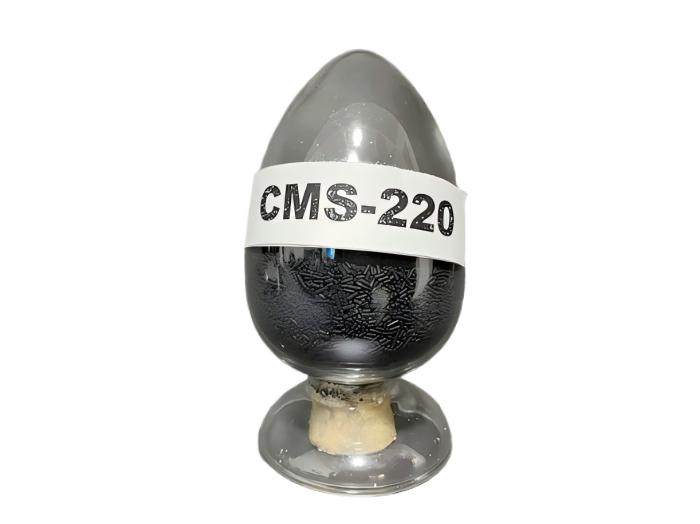
Carbon molecular sieves are engineered porous carbon materials with precisely controlled pore networks, formed by controlled thermal processing of carbon precursors.
Structure & Separation Mechanism
CMS features a dual pore structure: large micropores for high adsorption capacity, and ultramicropores (~4 Å) for precise molecular sieving. Separation occurs via kinetic selectivity: smaller molecules diffuse into the narrow pores faster than slightly larger molecules.
This effect is the basis of air separation:
| Gas | Approximate Size | Behavior in CMS Pores |
|---|---|---|
| Oxygen (O₂) | ~0.346 nm | Diffuses into pores quickly and becomes trapped |
| Nitrogen (N₂) | ~0.364 nm | Larger size slows entry; passes through the bed as product gas |
Key Properties & Applications
CMS withstands high heat and harsh chemicals, and delivers very high purity separation of similarly sized molecules (e.g. C₂H₄/C₂H₆). It is the standard adsorbent for PSA nitrogen generators, delivering nitrogen purity up to 99.999% with fast 2–5 minute cycles. Common applications include:
- Industrial nitrogen generation for metal processing, food preservation, medical facilities, and energy storage
- Pipeline purging, tank blanketing, and natural gas treatment
- Wastewater treatment and flue gas purification
YUANHAO is a leading CMS manufacturer with ISO 9001/14001/45001 certification, offering purity tiers from 95% to 99.999%+ across multiple pressure grades.
How Zeolite Molecular Sieves (ZMS) Work
Zeolite molecular sieves are crystalline aluminosilicate materials with a rigid 3D framework of corner-sharing SiO₄ and AlO₄ tetrahedra.
Structure & Separation Mechanism
Isomorphous substitution of Al³⁺ for Si⁴⁺ gives the framework a net negative charge, balanced by exchangeable cations (Na⁺, K⁺, Ca²⁺). Removable water of crystallization fills the pores; when removed, the open pore network selectively adsorbs polar molecules via strong ionic electrostatic forces.
Separation operates via equilibrium selectivity: polar molecules (water, CO₂, sulfur compounds) are held tightly inside the pores, even at ppm concentrations, while non-polar bulk gas passes through. Internal surface area can reach up to 1,000 m²/g, enabling very high adsorption capacity.
Common zeolite pore classes:
| Ring Structure | Approximate Aperture | Pore Class Example |
|---|---|---|
| 8-membered | ~4 Å | Small-pore (3A, 4A, 5A) |
| 10-membered | ~5.5 Å | Medium-pore (ZSM-5) |
| 12-membered | ~7.5 Å | Large-pore (X, Y, FAU) |
Key Properties & Applications
ZMS is the industry standard for deep gas drying, removing moisture down to ppm levels. Other common uses include:
- Oxygen production and air separation
- CO₂ removal and natural gas purification
- Solvent dehydration and petrochemical processing
- Instrument air drying and moisture-sensitive electronics protection
CMS vs ZMS: Side-by-Side Comparison
| Metric | Carbon Molecular Sieve (CMS) | Zeolite Molecular Sieve (ZMS) |
|---|---|---|
| Separation mechanism | Kinetic (diffusion rate-based) | Equilibrium (affinity-based) |
| Pore structure | Uniform ultramicropores for precise size separation | Broader pore size distribution; ionic adsorption sites |
| Nitrogen purity | >99.9%; <0.1% fluctuation over 24–48h | 95–99%; can drop 1–2% under high humidity |
| Cycle time | 2–5 minutes | 5–10 minutes |
| Typical production capacity | 500–2,000 Nm³/h | 300–1,500 Nm³/h |
| Regeneration tolerance | Forgiving of minor pressure/temperature swings | Requires precise control; poor timing degrades material |
| Robustness | Excellent heat and chemical resistance | Strong, but sensitive to high moisture load |
| Typical service life | 5–10 years (continuous operation) | 2–5 years |
Note: Comparing cost per kg alone can be misleading. Total cost of ownership includes filling quantity, regeneration costs, service life, pressure drop, and downtime.
How to Choose Between CMS and ZMS
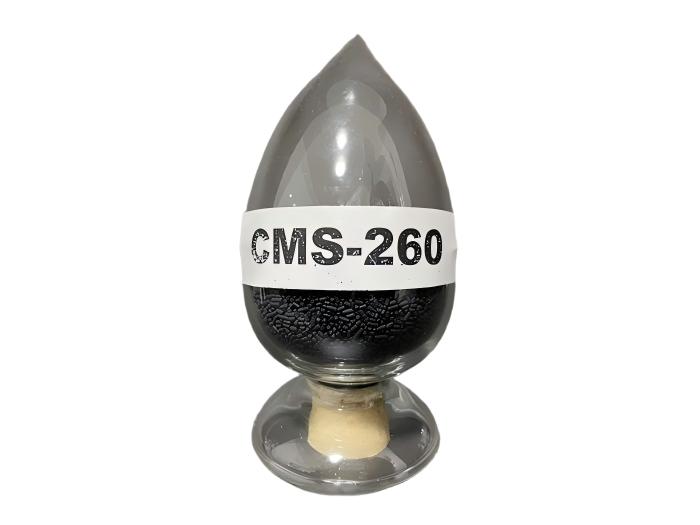
Select the right sieve based on your feed stream, purity requirements, and operating conditions:
- Feed composition: Air separation for nitrogen production favors CMS; wet streams requiring deep dehydration favor ZMS.
- Purity targets: Tight nitrogen purity specifications (>99.9%) point to CMS; moderate purity drying applications work with ZMS.
- Operating conditions: High-pressure, harsh process environments favor CMS; moderate conditions with polar contaminants favor ZMS.
- Cycle speed requirements: Fast-cycle PSA systems pair best with CMS; slower equilibrium cycles work with ZMS.
Always confirm the final selection with supplier consultation or a pilot test on your actual feed stream to avoid costly rework.
FAQ
How does a carbon molecular sieve separate oxygen from nitrogen?
It relies on kinetic selectivity: oxygen molecules are slightly smaller and diffuse into the narrow pores faster, becoming trapped. Larger nitrogen molecules pass through the bed as product gas. Separation is driven by diffusion rate difference, not chemical reaction.
What pore sizes do CMS and ZMS offer?
CMS typically has 3–5 Å pores, with precise ~4 Å ultramicropores for air separation. Zeolite grades range from ~0.3 nm (3A) to ~1.0 nm (13X), matched to target molecule size.
How long do molecular sieves last?
CMS lasts 5–10 years in continuous operation. Zeolite beds typically last 2–5 years. Service life depends heavily on feed air quality, humidity, and pressure stability. Thermal/chemical regeneration restores 60–70% of original performance.
Which material is best for nitrogen generators?
CMS is the standard for nitrogen generation, delivering >99.9% purity with fast, steady cycles. Zeolite grades deliver 95–99% purity and are better suited for drying, oxygen production, and petrochemical purification.
Does YUANHAO offer custom CMS grades?
Yes. YUANHAO manufactures CMS products with ISO 9001/14001/45001 certification, purity tiers from 95% to 99.999%+, and multiple pressure variants. Pilot testing on actual feed streams is available to confirm performance.