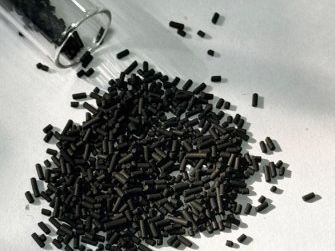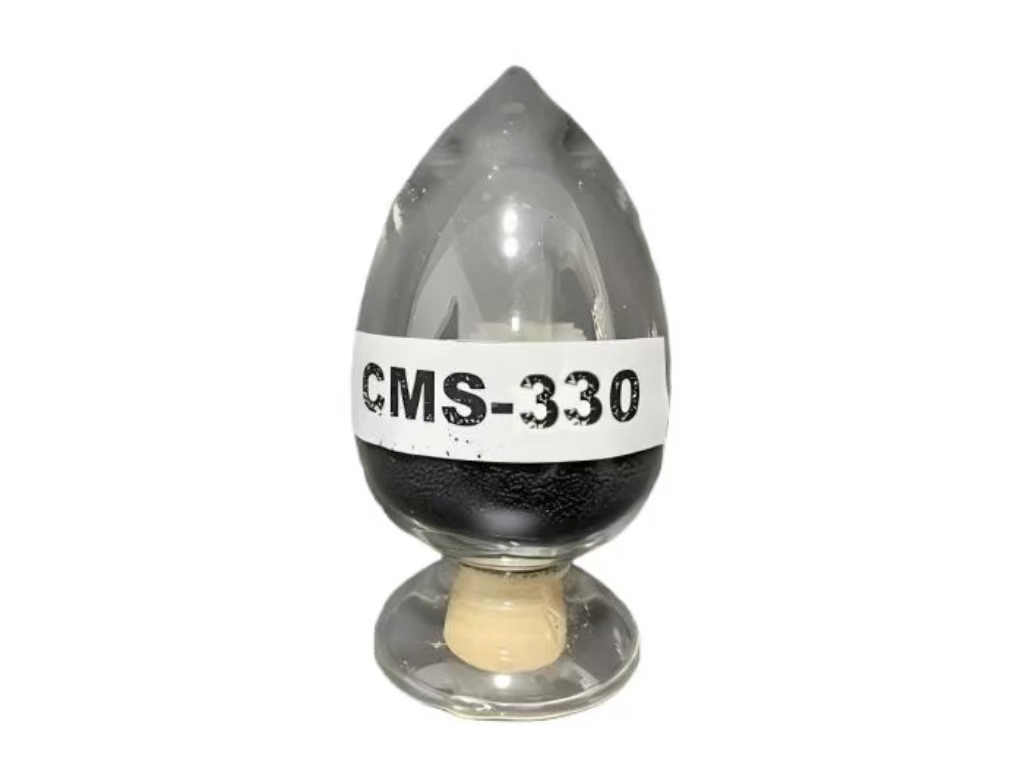
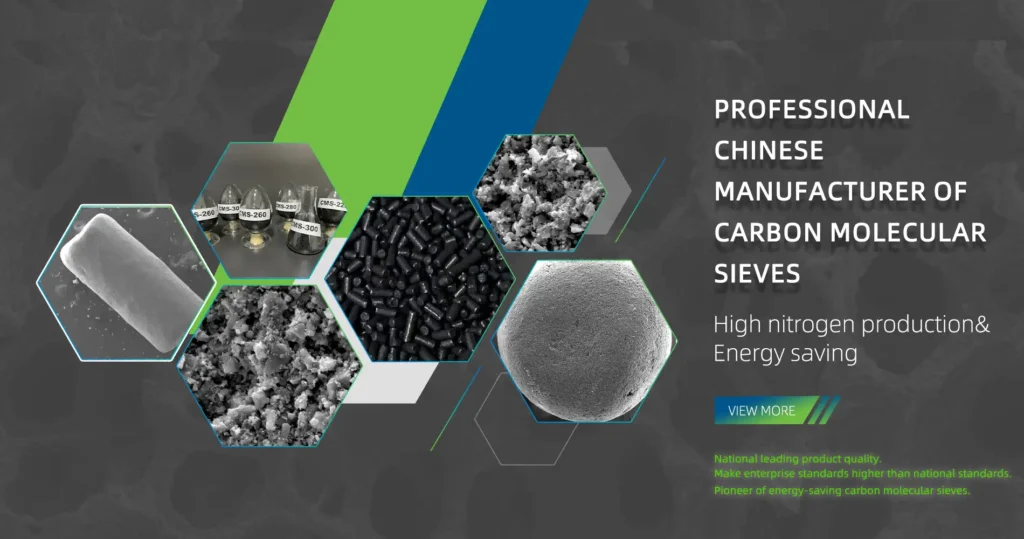
Carbon molecular sieve (CMS) production creates precise pore structures through controlled pyrolysis and activation processes. Every step from raw material to finished CMS follows strict rules that shape pore formation and gas separation performance.
This guide breaks down each production stage, its impact on pore structure, and how to match CMS grades to PSA nitrogen generation systems.
Key Takeaways
- Precursor selection sets the baseline pore shape and separation selectivity of the final CMS.
- Controlled carbonization builds a stable carbon skeleton that supports subsequent pore tuning.
- Precise activation and pore narrowing enable molecular-level separation of oxygen and nitrogen.
- Standardized pore structure and adsorption performance testing ensures consistent batch quality.
- Matching CMS grade to your PSA system parameters delivers optimal nitrogen production efficiency.
1. Raw Material Preparation
Precursor Options: Coal vs. Coconut Shell
Most commercial carbon molecular sieves are produced from coal or coconut shell precursors. Both can be carbonized and activated into porous carbon skeletons, but they form distinct pore structures. Yuanhao’s material data shows that coal and coconut shell precursors naturally form slit-shaped pores around 20 Å, delivering higher gas separation selectivity than standard activated carbon.
Synthetic polymers and coal tar pitch are also used, but they have higher batch-to-batch compositional variation and require standardized preprocessing to deliver consistent pore structure. Raw material variability is one of the biggest challenges in CMS manufacturing — differences in chemical composition between precursor batches directly carry through to final pore size distribution. Careful precursor selection is therefore the foundation of reliable CMS separation performance.
| Precursor Type | Pore Structure & Performance Notes |
|---|---|
| Coal, coconut shell | Forms slit-shaped pores ~20 Å; high gas separation selectivity |
| Coal tar pitch, polymer resins | Higher batch variation; requires standardized preprocessing for stable pore structure |
Shaping & Pre-Treatment
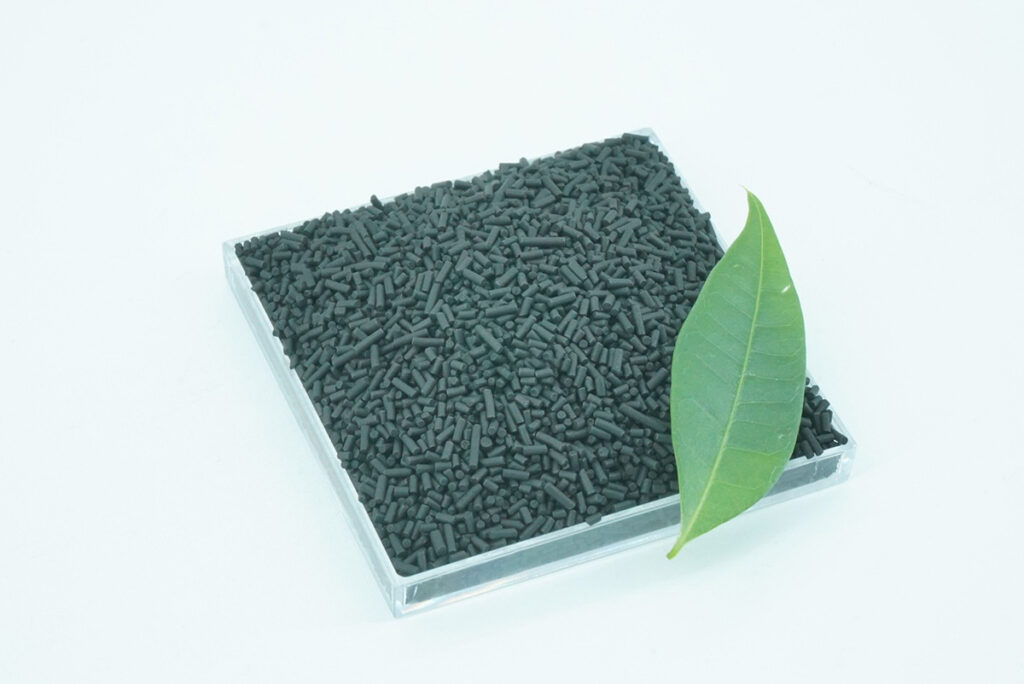
Precursors are first ground, sieved, purified and formed into uniform pellets or granules. Consistent particle density and geometry are critical, as the pore network develops inside each particle during subsequent heating processes.
Most production lines include a crosslinking or curing stage before pyrolysis — typically 350–450 °C for 2 hours for carbon-based precursors, or 150 °C air curing for phenolic resins. This locks in the precursor structure, ensuring even heat transfer and predictable adsorption performance in the finished product.
2. Carbonization & Pyrolysis
Removing Volatile Components
Carbonization is controlled pyrolysis in an inert atmosphere. The shaped precursor is heated to 800–900 °C, per Sorbitech, with inert gas shielding to prevent combustion. Non-carbon elements are driven off as gas, and the solid mass shrinks into a carbon-rich intermediate.
Process variables including temperature ramp rate, hold time, and atmosphere composition all affect the final skeleton. A slow, even temperature rise gives volatiles time to escape without cracking the pellets.
Forming the Carbon Skeleton
As volatiles escape, they leave behind an initial carbon skeleton with a broad, unselective pore distribution. Carbonization alone does not create size-selective pores — it only builds the structural foundation for activation and pore tuning in later stages.
This step is irreversible. A well-formed carbon skeleton supports all subsequent pore refinement; a poorly formed one limits what activation can achieve.
3. Activation & Pore Size Adjustment
Activation transforms the carbonized skeleton into a functional sieve by opening micropores and widening existing ones. Three core parameters control pore development: carbonization temperature, heating rate, and activation atmosphere.
Each variable shifts the balance between creating new pores and widening existing ones. A slow heating rate allows activating gas to penetrate deep into each pellet; a fast rate etches the outer surface first. Tuning all three parameters together produces a narrow, uniform micropore distribution.
Developing Microporous Structure
Activation creates the internal surface area of the CMS. Only micropores of specific width perform molecular sieving; wider pores add adsorption capacity but no selectivity. The goal is a narrow pore size band, not simply higher total pore volume.
This stage also sets the adsorption and diffusion rates that govern PSA cycle behavior. For oxygen-selective CMS, pores must be sized so oxygen diffuses in quickly while nitrogen enters slowly. This rate difference is what enables oxygen-nitrogen separation in PSA systems.
Pore Narrowing via Hydrocarbon Deposition
Activation alone typically produces pores slightly too wide for precise molecular sieving. Manufacturers then shrink pore openings to exact molecular dimensions.
The most common method is chemical vapor deposition of hydrocarbon gas: gaseous hydrocarbons are cracked inside the micropores, depositing thin layers of carbon at the pore mouth. Each deposition pass reduces the opening diameter toward the target size. Thin deposits preserve adsorption capacity; overly thick deposits can close pores entirely.
Additional surface modification treatments can further boost selectivity for target gas molecules while maintaining sufficient adsorption capacity. This final narrowing step is what turns general porous carbon into a selective molecular sieve.
4. Post-Treatment & Quality Control
Finishing Steps
After activation and pore tuning, finished CMS is cooled, size-classified, and cleaned of fine particles. Uniform particle sizing ensures even gas flow and predictable performance inside PSA adsorption towers.
Quality Verification
Manufacturers run rigorous testing before batch release to validate pore structure and real-world performance:
- Pore structure analysis: 77K nitrogen adsorption-desorption testing with density functional theory (DFT) modeling to measure micropore size distribution below 2 nm. Samples are degassed at 200–350 °C with 12–24 hours of equilibration per standard protocols. Mercury intrusion porosimetry, small-angle X-ray scattering and electron microscopy are used for larger pore ranges.
- Adsorption performance testing: Static adsorption measurements quantify equilibrium capacity, uptake kinetics, and O₂/N₂ selectivity.
- Mechanical strength testing: Abrasion tests measure particle durability under cyclic stress.
- Full PSA validation: Small-scale PSA test rigs confirm real-world nitrogen purity and production efficiency.
Quality control also verifies bulk density, particle size distribution, and crushing strength, with statistical process control to ensure batch-to-batch consistency. Industry standard HG/T 4364-2020 defines baseline specifications for commercial CMS grades.
5. CMS Grade Selection for PSA Nitrogen Generators
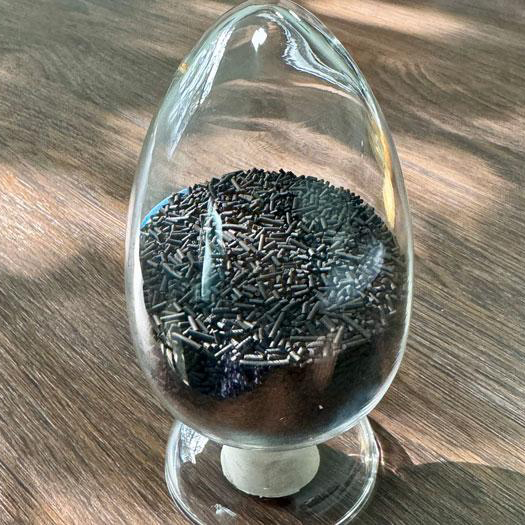
Production parameters directly translate to different CMS grades, matched to specific PSA system requirements of purity, operating pressure, and cycle length.
| Required Nitrogen Purity | CMS Grade Focus |
|---|---|
| 95%–99% | Productivity and compressed air efficiency |
| 99.50% | Stable output under continuous operation |
| 99.90% | Purity stability and batch consistency |
| 99.99%+ | High selectivity, cycle matching and inlet air quality tolerance |
Standard commercial CMS specifications include 1.7–2.2 mm particle size, ≥100 N crushing strength, ≥38 ml/g oxygen adsorption capacity, and nitrogen purity capability up to 99.999% per HG/T 4364-2020.
Grades are also segmented by operating pressure: high-pressure CMS for 1.0–1.6 MPa systems, low-pressure CMS for 0.5–0.6 MPa units. Specialized grades include long-cycle formulations for extended adsorption/regeneration cycles, and high-strength grades for heavy-duty cyclic operation.
FAQ
How does pore size control gas separation in carbon molecular sieves?
CMS uses size-selective adsorption: precisely sized micropores allow smaller oxygen molecules to diffuse in quickly, while larger nitrogen molecules enter much more slowly. This rate difference enables oxygen-nitrogen separation inside PSA nitrogen generators.
Why is hydrocarbon deposition done after activation?
Activation creates a broad pore distribution that is usually slightly too wide for precise sieving. Hydrocarbon vapor deposition adds thin carbon layers at pore mouths, shrinking openings to the exact molecular diameter needed for selective separation.
How do manufacturers verify CMS quality before shipment?
Pore structure is confirmed via 77K nitrogen adsorption-desorption testing with DFT modeling. Performance is validated through static adsorption tests, abrasion strength testing, and small-scale PSA rig trials. Statistical process control ensures batch-to-batch consistency.
How do you match CMS grades to a PSA system?
Select grade based on your target nitrogen purity, operating pressure, and cycle length. High-purity applications require high-selectivity grades; high-throughput systems prioritize productivity grades. Pressure rating and crushing strength should also match your system parameters.
What role does the CMS adsorption tower play in PSA operation?
The adsorption tower holds the CMS bed where gas separation occurs. Compressed feed air passes through the bed; oxygen adsorbs onto the CMS, and nitrogen product flows out the outlet. Tower design must be matched to CMS adsorption kinetics and cycle timing to avoid wasted capacity and reduced purity.