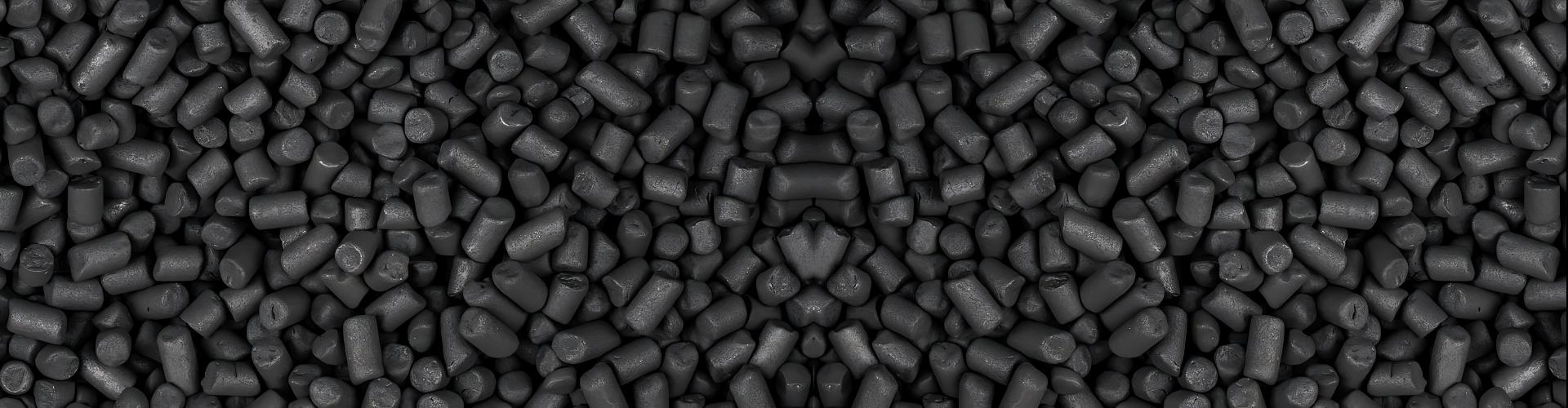
Carbon molecular sieves separate gases by kinetic diffusion: smaller oxygen molecules slip into pores faster than larger nitrogen molecules. Zeolite molecular sieves work by equilibrium adsorption: molecules stick to the internal crystal surface until the bed saturates.
This fundamental difference shapes all gas separation equipment, from PSA nitrogen generators to oxygen production, gas drying, and CO₂ removal systems. Choosing the wrong sieve will reduce product purity, raise energy costs, and shorten adsorbent service life. This guide compares both materials side by side, explains their separation mechanisms, and provides a clear decision framework to match sieve type to your process.
Key Takeaways
- Carbon molecular sieves (CMS) separate gases by diffusion speed; zeolite molecular sieves separate by adsorption strength.
- CMS is the standard adsorbent for PSA nitrogen generators. Zeolite is preferred for oxygen production, gas drying, and CO₂ removal.
- Select sieve material based on target gas, feed composition, and operating conditions for optimal performance.
- Regeneration method drives operating costs: CMS uses pressure swing adsorption (PSA); zeolite often uses thermal swing adsorption (TSA).
- Activated carbon cannot replace molecular sieves for precision gas separation — each material serves a distinct purpose.
Core Differences Between Carbon Molecular Sieve and Zeolite Molecular Sieve
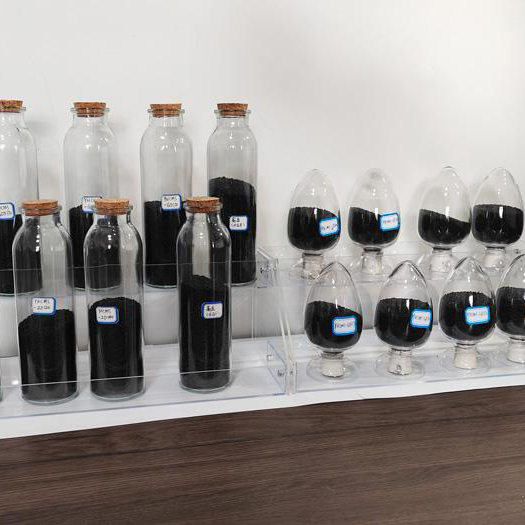
Material Composition & Pore Structure
| Type | Material | Pore Structure | Key Properties |
|---|---|---|---|
| Carbon Molecular Sieve (CMS) | Non-polar carbon-based adsorbent (coal/coconut shell precursor) | Narrow slit-shaped micropores, 0.28–0.38 nm | Hydrophobic, size-selective, 5–8 year service life under proper conditions |
| Zeolite Molecular Sieve | Crystalline aluminosilicate | Rigid uniform cage-like pores with polar internal surface | High affinity for polar molecules (water, CO₂), precise size exclusion |
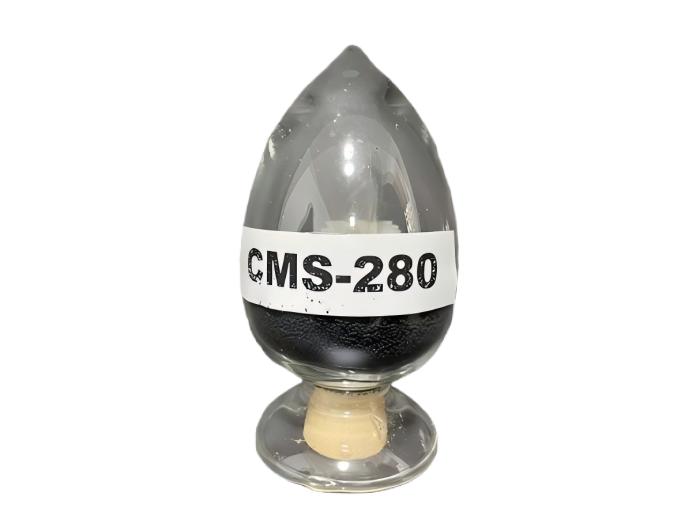
YUANHAO’s commercial CMS line includes grades CMS-220 through CMS-330, with tuned pore sizes to deliver nitrogen purity up to 99.999% in PSA systems.
Separation Mechanism
Kinetic Separation (CMS)
CMS separates gases based on diffusion rate. Smaller oxygen molecules enter micropores quickly, while larger nitrogen molecules diffuse in much more slowly. In a PSA nitrogen generator, this means oxygen is adsorbed onto the CMS bed, and nitrogen passes through as the final product. Pore size precision is the critical factor here — even a 0.01 nm shift changes separation efficiency dramatically.
Equilibrium Adsorption (Zeolite)
Zeolite separates based on adsorption strength. Its crystalline lattice has charged polar sites that bind molecules by polarity and size at equilibrium. For example, in PSA oxygen plants, 13X or Li-LSX zeolite strongly adsorbs nitrogen, allowing oxygen to flow out as product.
Applications and Grade Comparison of Carbon Molecular Sieve and Zeolite Molecular Sieve
Air Separation: Nitrogen vs Oxygen Production
- PSA Nitrogen Generation: CMS is the industry standard. Compressed air flows through the CMS bed, oxygen diffuses into pores first, and high-purity nitrogen exits as product. Different CMS grades are tuned for 95% to 99.999% purity targets.
- PSA Oxygen Production: Zeolite is used. The crystal lattice adsorbs nitrogen by polarity and size, leaving oxygen as the product gas.
Gas Drying & CO₂ Removal
Zeolite is the dominant choice for dehydration and acid gas removal, thanks to its polar internal surface. Four standard grades cover most industrial applications:
| Zeolite Grade | Pore Size | Primary Adsorption Targets | Main Applications |
|---|---|---|---|
| 3A | 3 Å (potassium-exchanged) | Water only; excludes all larger molecules | Cracked gas drying, olefin drying, insulated glass, alcohol dehydration |
| 4A | 4 Å (sodium form) | Water, NH₃, H₂S, SO₂, CO₂, ethanol, ethane, ethylene | Natural gas drying, argon purification, deep air/hydrocarbon drying |
| 5A | 5 Å (calcium-exchanged) | Molecules <5 Å, C3–C4 n-alkanes | Natural gas drying, CO₂ adsorption, air separation |
| 13X | 10 Å (sodium X type) | Water + CO₂ + H₂S co-adsorption | Air separation unit pre-purification, natural gas/LNG drying |
High-performance 3A zeolite can hold up to 22% of its weight in water; 13X zeolite delivers static water adsorption of ≥25 wt% at 25°C and saturated humidity. In air separation plants, a single 13X bed removes both moisture and CO₂ upstream of the cold box, preventing freeze-up of heat exchangers.
CMS vs Activated Carbon: Clearing the Common Confusion
These two carbon-based materials are often confused, but they serve completely different functions:
- Carbon molecular sieve: Separates gas pairs by precise molecular size. It has narrow, controlled micropores designed for kinetic sieving of oxygen/nitrogen and other gas mixtures.
- Activated carbon: Adsorbs liquids, organics and vapors by general surface affinity. It has a broad pore size distribution and cannot perform precision gas separation.
Activated carbon cannot replace CMS in a PSA nitrogen generator, and CMS is not a substitute for activated carbon in water treatment or organic vapor recovery. It is common for both materials to be used in the same plant, each treating its own process stream.
How to Choose the Right Molecular Sieve
Start with three core inputs to select the correct sieve:
- Target gas and desired purity: For nitrogen production, select CMS grade matched to your purity target (95% to 99.999%). For oxygen, drying or CO₂ removal, select the corresponding zeolite grade.
- Feed gas composition: Humid or contaminated feeds may require pre-treatment or a higher-grade adsorbent.
- Operating conditions: Match sieve grade to your system’s pressure, temperature and cycle design.
For new installations, always validate performance with feed gas trials on the actual sieve grade before full bed replacement.
FAQ
What is the main difference between carbon molecular sieve and zeolite?
CMS separates gases by kinetic diffusion speed, with size-selective slit-shaped carbon pores. Zeolite separates by equilibrium adsorption strength, using a polar crystalline aluminosilicate structure.
Which sieve is used in PSA nitrogen generators?
Carbon molecular sieve (CMS) is the standard adsorbent for PSA nitrogen production. It selectively adsorbs oxygen faster than nitrogen, delivering high-purity nitrogen product.
Which molecular sieve is best for gas drying?
Type 3A zeolite is the top choice for exclusive water removal. Type 4A and 5A add CO₂ and sulfur compound removal. Type 13X removes both water and CO₂ in a single bed. Activated carbon has no function in molecular sieve drying beds.
Can activated carbon replace a molecular sieve for gas separation?
No. Activated carbon adsorbs organics and vapors by general surface affinity, and lacks the precise narrow pore structure needed for gas pair separation. It cannot substitute for CMS or zeolite in PSA systems.
How do I pick the right sieve grade?
Start with your target gas, feed composition, and operating conditions. Match the separation mechanism and pore size to your process requirements. Suppliers can validate performance with on-site feed trials.