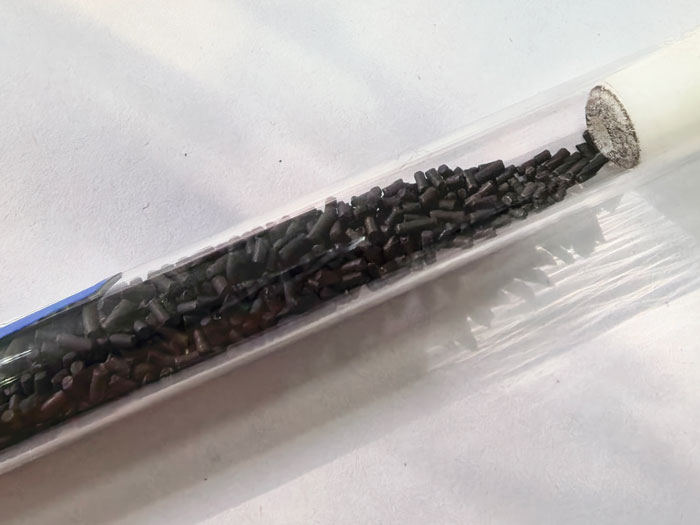
In modern industrial gas separation and purification systems, Pressure Swing Adsorption (PSA) has become the mainstream process due to its advantages of simplified workflow, low energy consumption, stable operation, and high automation. Carbon molecular sieves, as the core functional materials in PSA technology, directly determine separation efficiency, product purity, equipment energy consumption, and service life. With increasing demands for high-pressure conditions, high-purity gases, and continuous stable operation in industrial applications, High-Pressure Carbon Molecular Sieves (HP-CMS) have emerged as indispensable core materials for advanced PSA equipment. They are widely used in petrochemicals, metal smelting, electronics manufacturing, food preservation, coal mine fire prevention, aerospace, and other fields. This article comprehensively analyzes the technical value and application prospects of HP-CMS from aspects such as working principles, core characteristics, technological advantages, application scenarios, and industry value.
Working Principle of High-Pressure Carbon Molecular Sieves
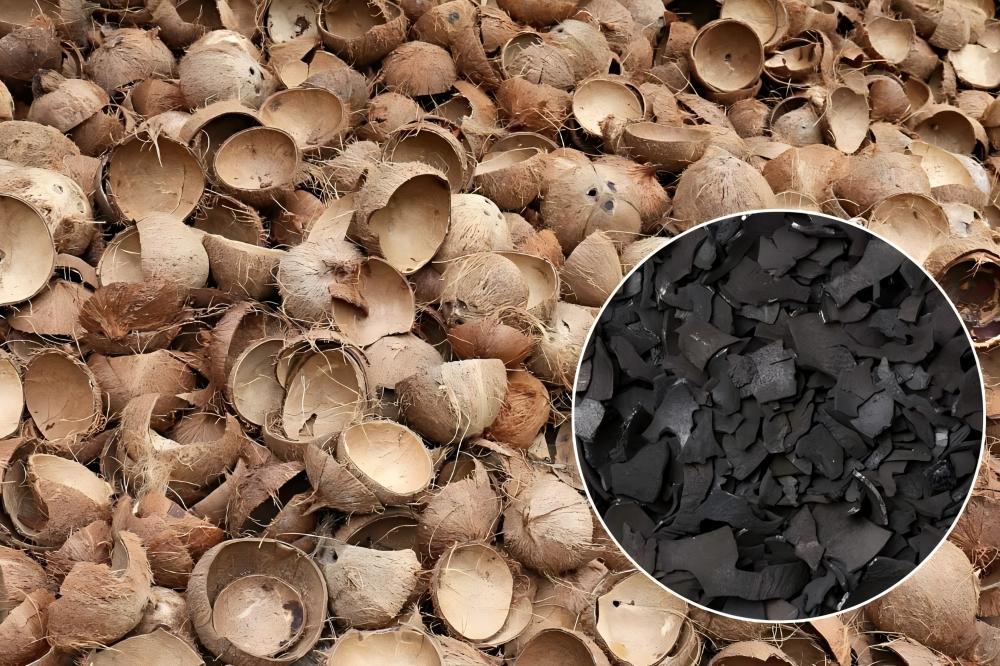
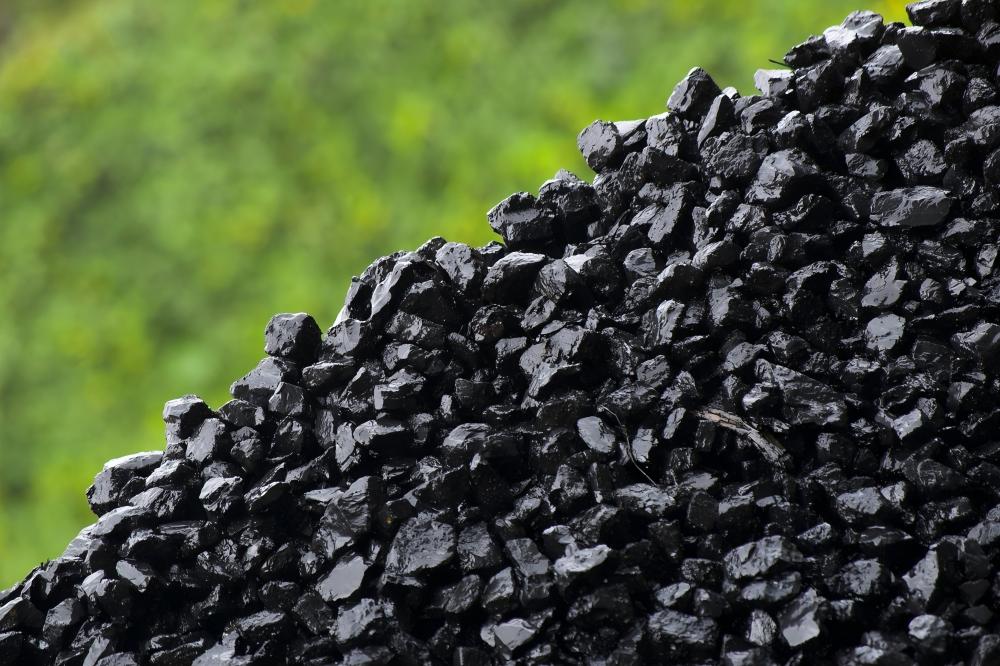
Based on kinetic selectivity, high-efficiency separation carbon molecular sieves are porous carbon-based adsorbent materials prepared from carbon-containing organic precursors such as coal, resin, and coconut shells through specialized processes including carbonization, activation, and pore size regulation. Their core feature lies in an extremely narrow pore distribution with precisely controlled pore sizes within 0.3-0.4 nm, which perfectly matches the kinetic diameters of common gas molecules like oxygen, nitrogen, and carbon dioxide.
High-pressure carbon molecular sieves are specifically engineered for high-pressure applications, operating on the principle of kinetic adsorption selectivity. Under elevated pressure, when gas mixtures fully contact the molecular sieve, smaller molecules (e.g., oxygen O₂, carbon dioxide CO₂, and water vapor H₂O) diffuse rapidly through the micropores and get selectively adsorbed. Larger molecules (e.g., nitrogen N₂ and methane CH₄) diffuse more slowly, remaining trapped in the micropores. This process effectively concentrates target gases while removing impurities, achieving high-efficiency separation.
Unlike atmospheric pressure carbon molecular sieves, high-pressure carbon molecular sieves feature specially reinforced microporous structures. Under pressures ranging from 0.6 to 1.5 MPa or higher, the micropores remain stable without collapse or deformation, maintaining consistent adsorption capacity and separation selectivity. The adsorption-regeneration cycle is achieved through pressure switching (high-pressure adsorption and low-pressure desorption), eliminating the need for high-temperature heating. Continuous separation is accomplished solely through pressure variations, ensuring a fully physical adsorption process without chemical reactions. This environmentally safe and eco-friendly approach meets the demands of large-scale, continuous gas production in industrial applications.
Core Performance of High-Pressure Carbon Molecular Sieves
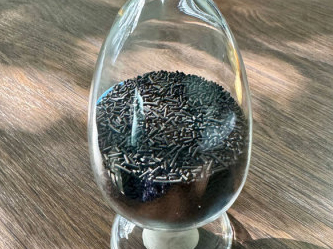
Three Key Features-Pressure Resistance, High Efficiency, and Stability. Traditional carbon molecular sieves often suffer from structural pulverization, reduced adsorption capacity, decreased separation efficiency, and shortened service life under high-pressure conditions, failing to meet the operational requirements of high-pressure PSA equipment. Through breakthroughs in core processes including precursor optimization, high-temperature deep carbonization, gradient activation, and framework reinforcement, high-pressure carbon molecular sieves have achieved three major performance upgrades, perfectly adapting to the stringent high-pressure operating conditions.
Exceptional mechanical strength and pressure resistance
The high-pressure carbon molecular sieve features a high-density carbon skeleton structure, significantly enhancing particle mechanical strength. It can stably withstand long-term working pressures ranging from 0.6 to 1.2 MPa, with instantaneous pressure resistance exceeding 1.5 MPa. Under conditions of high-pressure airflow impact and frequent pressure fluctuations, the molecular sieve particles remain intact without fragmentation or pulverization. This effectively prevents dust clogging of pipelines, valves, and filters, reduces equipment maintenance costs, and extends the service life of adsorption towers and entire systems.
Precision aperture control enables superior separation selectivity
By precisely regulating micropore size and distribution, high-pressure carbon molecular sieves achieve “precision sieving” of gas molecules. With micropore diameters concentrated between 0.33–0.38 nm and a pore size distribution uniformity exceeding 95%, these sieves exhibit adsorption rates for oxygen and carbon dioxide dozens of times higher than nitrogen, demonstrating significantly better separation selectivity compared to conventional carbon molecular sieves. In high-pressure nitrogen production applications, they can effortlessly generate high-purity nitrogen with 95%–99.999% purity while increasing nitrogen recovery rates by 15%–20%. Under identical equipment conditions, this system achieves higher gas production efficiency and lower energy consumption.
High adsorption capacity with stable regeneration performance
Under high-pressure conditions, the increased gas molecular density fully utilizes the microporous adsorption sites of high-pressure carbon molecular sieves, achieving over 30% higher unit adsorption capacity compared to atmospheric molecular sieves. The system demonstrates excellent desorption efficiency, rapidly removing adsorbed impurities at low pressure without residual adsorption or saturation lag, ensuring stable adsorption-regeneration cycles. After prolonged continuous operation, the adsorption capacity decay rate remains below 5%, with a service life of 3-5 years—significantly longer than conventional carbon molecular sieves.
Exceptional operational adaptability
The high-pressure carbon molecular sieve demonstrates outstanding water resistance, oil resistance, and impurity impact resistance, enabling it to handle feed gas containing trace amounts of oil, water, and dust without being prone to poisoning or deactivation. With superior chemical stability, it withstands acids, alkalis, and high temperatures (short-term tolerance up to 200℃), making it suitable for harsh industrial environments such as petrochemical plants, offshore platforms, and coal mines. The system requires no complex feed gas pretreatment, significantly reducing associated costs.
Main Applications of High-Pressure Carbon Molecular Sieves
With the rapid development of industrial automation, high-end manufacturing, and green energy, the applications of high-pressure carbon molecular sieves have expanded significantly, making them an indispensable core material across multiple industries.
High-pressure PSA nitrogen generation system
This represents the core application domain of high-pressure carbon molecular sieves. In scenarios such as electronic component manufacturing, metal heat treatment, chemical reaction protection, food preservation with controlled atmosphere, coal mine fire prevention and explosion suppression, and tire nitrogen charging, high-pressure nitrogen (0.6~1.0MPa) can directly meet on-site requirements without secondary pressurization. High-pressure carbon molecular sieves are compatible with high-pressure PSA nitrogen generation equipment, directly producing high-pressure, high-purity nitrogen gas. This eliminates the need for auxiliary equipment like booster pumps, simplifies the process, reduces energy consumption, and achieves integrated “nitrogen generation-supply” functionality.
Purification and Recovery of Industrial Gases
In petrochemical and coal chemical industries, high-pressure carbon molecular sieves are employed to purify syngas, natural gas, and coke oven gas. These systems efficiently remove impurities such as carbon dioxide, hydrogen sulfide, and water vapor, while purifying target gases like hydrogen and methane. Additionally, they enable the recovery and reuse of valuable gases from exhaust streams, reducing raw material waste and aligning with green and low-carbon production principles.
Hydrogen Storage, Transportation, and Fuel Cell Integration
As a clean energy source, hydrogen requires extremely high purity standards for purification and storage/transportation. High-pressure carbon molecular sieves can be utilized for high-pressure hydrogen purification, removing trace impurities to produce fuel cell-grade high-purity hydrogen. They also serve as pre-purification systems for high-pressure hydrogen storage, ensuring the safe and stable operation of hydrogen energy equipment.
Gas Separation in Special Operating Conditions
In specialized applications such as offshore drilling platforms, aerospace, and deep-sea equipment, where space is limited and operating conditions are extreme, high-pressure carbon molecular sieves have emerged as the core material for compact high-pressure gas separation systems. Their advantages—compact size, high efficiency, and exceptional stability—enable them to meet the stringent requirements for high-purity gas supply in these challenging environments.
Key Criteria for Selecting High-Quality High-Pressure Carbon Molecular Sieves
Enterprises should prioritize the following core indicators when selecting high-pressure carbon molecular sieves to ensure efficient and stable equipment operation:
Pressure Resistance: Prioritize products with a pressure tolerance of≥0.8MPa for high-pressure applications.
Nitrogen Recovery Rate: Higher recovery rates reduce energy consumption and operational costs.
Particle Strength: Wear rate≤0.5% to prevent powdering and equipment clogging. Adsorption Capacity: Greater adsorption capacity per unit mass enhances gas production efficiency.
Service Life: Minimum 3 years under normal operating conditions to minimize replacement costs.
High-performance high-pressure carbon molecular sieves require rigorous raw material screening, precise process control, and comprehensive performance testing to ensure stable and consistent product performance across batches, providing reliable support for PSA equipment.
Industry Trends and Value Outlook
With the advancement of the “dual carbon” goals, the industrial transition toward greener and more efficient operations is accelerating. As a low-energy gas separation technology, pressure swing adsorption (PSA) is experiencing sustained market growth. High-pressure PSA systems, featuring no need for booster pressure, simplified processes, compact footprint, and lower energy consumption, are gradually replacing traditional low-pressure equipment and emerging as the industry’s mainstream solution. This shift has created vast market opportunities for high-pressure carbon molecular sieves.
In the future, with continuous breakthroughs in aperture precision control technology, skeleton reinforcement technology, and high-efficiency activation technology, high-pressure carbon molecular sieves will evolve toward higher pressure resistance, enhanced selectivity, extended lifespan, and reduced costs, further expanding their applications in emerging fields such as hydrogen energy, carbon capture, and high-end electronic gases.
As the “heart” of high-pressure pressure swing adsorption (PSA) systems, high-pressure carbon molecular sieves are not only functional materials but also a core support for advancing industrial gas separation technology, reducing industrial energy consumption, and facilitating green production. Selecting high-performance high-pressure carbon molecular sieves is a critical measure to enhance equipment competitiveness, reduce operating costs, and ensure production stability.
With decades of expertise in adsorption separation materials, our company specializes in the R&D, production, and application of high-pressure carbon molecular sieves. Leveraging advanced manufacturing processes, rigorous quality control, and professional technical services, we deliver high-pressure carbon molecular sieves with exceptional pressure resistance, high selectivity, and long service life. These products are fully customizable to meet specific equipment parameters, gas purity requirements, and pressure specifications, enabling customers to achieve efficient, energy-saving, and stable gas separation and purification.