
high pressure carbon molecular sieves
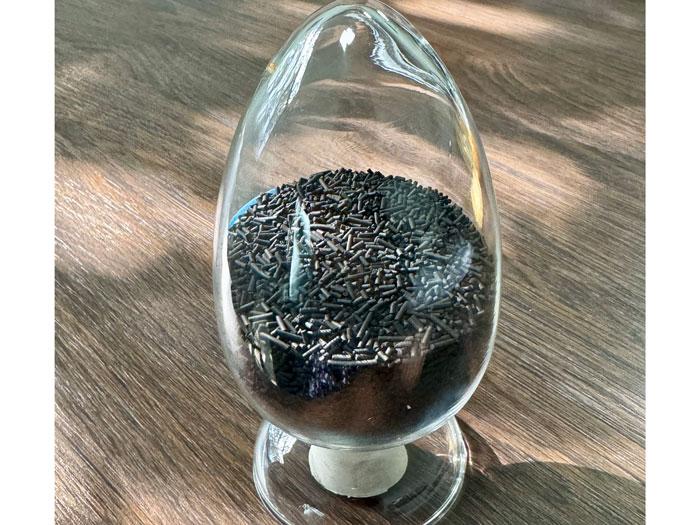
Crush-Resistant Structure
High pressure CMS is manufactured with enhanced mechanical strength, allowing it to resist crushing under pressures above 6.0 MPa during PSA cycles.
Low Dust Generation
Its uniform particle size and solid form reduce dust production, which protects downstream valves and extends the life of nitrogen generation equipment.
Stable N₂ Purity Under High Pressure
Even under elevated working pressures, it maintains consistent nitrogen purity levels up to 99.5%, making it suitable for demanding industrial environments.
Suitable For:
High-pressure nitrogen generators in oil and gas fields
Industrial gas cylinder filling and bottling stations
PSA systems used in petrochemical and energy industries
Key Product Features
At YUANHAO, our Carbon Molecular Sieve is expertly developed to fulfill the demanding standards of PSA nitrogen generation systems. With rigorous quality management and full compliance with international benchmarks, our CMS delivers superior adsorption efficiency, excellent mechanical strength, and an extended lifespan.
This specification section outlines the key performance parameters of our CMS products—ensuring you find the ideal solution for reliable and efficient industrial gas separation.
| Model | Adsorption pressure(Mpa) | Nitrogen concentration (%) | Carbon yield(L/h.kg) | Air / nitrogen |
| YHCMS-GY280 | 1.0-1.6 | 99.999 | 80 | 5.6 |
| 99.99 | 110 | 4.8 | ||
| 99.9 | 180 | 3.7 | ||
| 99.5 | 280 | 2.8 | ||
| 99 | 340 | 2.7 | ||
| 98 | 430 | 2.4 | ||
| 97 | 470 | 2.3 | ||
| 95 | 510 | 2.2 | ||
| YHCMS-GY300 | 1.0-1.6 | 99.999 | 95 | 5.3 |
| 99.99 | 130 | 4.6 | ||
| 99.9 | 200 | 3.5 | ||
| 99.5 | 300 | 2.7 | ||
| 99 | 360 | 2.6 | ||
| YHCMS-GY330 | 1.0-1.6 | 99.999 | 115 | 5.1 |
| 99.99 | 150 | 4.3 | ||
| 99.9 | 220 | 3.2 | ||
| 99.5 | 310 | 2.6 | ||
| 99 | 380 | 2.5 | ||
| Particles diameter(mm) | 1.2-1.3 | Bulk density (g/L) | 670-690 | |
| Adsorption Time(s) | 2*40-45 | Crushing strength (N/pcs) | ≥60-120 | |
| Ps: The optimal nitrogen production effect is achieved when the intake temperature is around 20-25℃. | ||||
| Special models and requirements can be customized. | ||||
Common FAQ
A holistic solution to your most common questions about YUANHAO’s products, services and brands.
Why Use Carbon Molecular Sieves For Gas Separation?
Carbon molecular sieves (CMS) are widely used for gas separation because of their unique ability to separate gases based on the size and shape of their molecules. CMS materials have very small and uniform pores, typically around 3 to 5 angstroms wide. These tiny pores allow certain gas molecules, like oxygen, to enter and be adsorbed more quickly, while blocking or slowing down larger molecules, such as nitrogen.
This selective adsorption makes CMS especially effective in Pressure Swing Adsorption (PSA) systems to produce high-purity nitrogen from air. When air passes through the CMS, oxygen molecules get trapped inside the pores, and nitrogen passes through as the product gas.
Besides their precise separation ability, carbon molecular sieves are also very durable and resistant to mechanical wear. They can operate under various pressures and temperatures without losing performance. CMS also regenerate easily during the PSA process, which helps maintain stable operation and extends their lifespan.
In summary, carbon molecular sieves offer accurate gas separation, strong durability, and efficient regeneration, making them an ideal choice for industrial gas purification, especially where nitrogen purity and reliability are important.
What is the lifespan of carbon molecular sieve?
The lifespan of a carbon molecular sieve is usually 8 to 10 years when used in a properly maintained PSA nitrogen generation system. However, the actual life can vary depending on factors like air quality, operating pressure, temperature, and how often the system runs.
If the air is clean and dry, and the system is well-maintained, the CMS can last longer. In harsher conditions or with poor air quality, the lifespan may be shorter, around 5 to 7 years.
To extend the lifespan, it’s important to use good filters, remove moisture and oil from the air, and avoid sudden pressure changes.
How to make a carbon molecular sieve?
Making a carbon molecular sieve involves several key steps. First, a carbon-rich raw material like coal, wood, or coconut shells is selected. This material is then heated at high temperatures without oxygen in a process called carbonization, which turns it into carbon.
Next, the carbon is treated with steam or chemicals at very high temperatures to create tiny, uniform pores—this step is called activation. After activation, the material undergoes a special heat treatment called thermal annealing. This step carefully adjusts the size and shape of the pores to make the sieve able to separate gases based on molecule size.
Finally, the carbon molecular sieve is cooled, crushed, and screened to the desired particle size before it is ready for use in gas separation systems like PSA nitrogen generators.